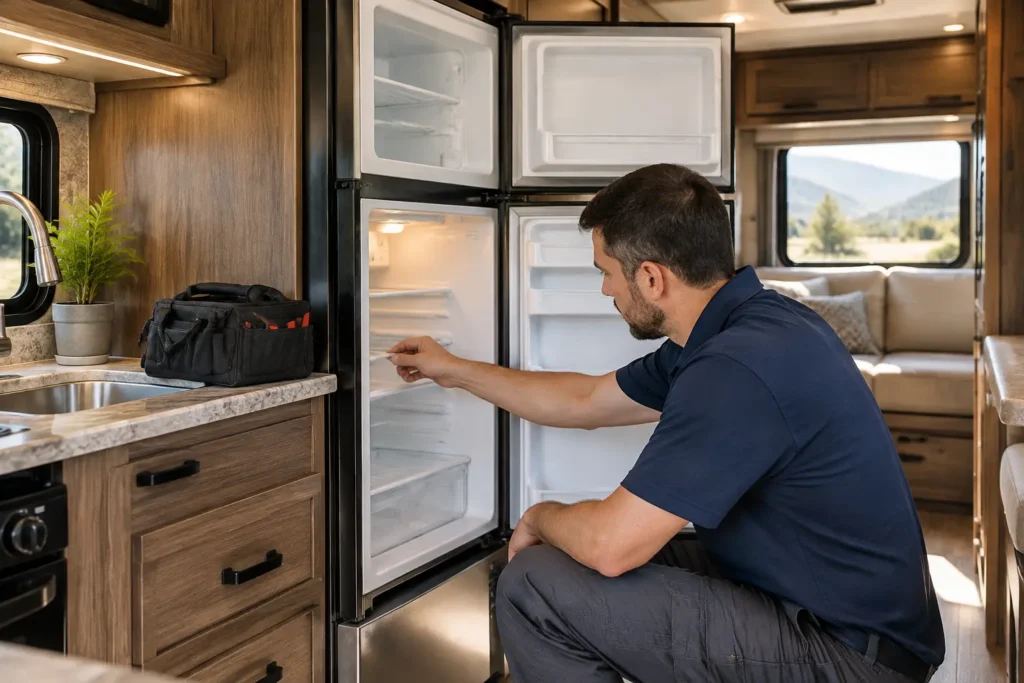
Start with the refrigerator type and its power source
RV refrigerators do not all cool the same way. Some absorption models can operate on propane gas or electricity, while compressor models often use electricity from a battery or another power source. Hybrid designs are also available. The right first checks depend on the model, so look for the model number and consult the owner’s manual before changing settings.
If the refrigerator has stopped cooling, note what it was using when the problem began: propane, shore power, a generator, or battery power. Also note whether the freezer is cold, whether the problem affects every compartment, and whether a warning light or error code appears. These details can help a repair professional narrow down the issue without guesswork.
Safe checks you can make without opening the appliance
- Confirm the selected mode. Check that the refrigerator is set to a mode supported by your model and that the temperature control has not been changed accidentally. Follow the manual when switching between power sources.
- Check the available supply. If you are connected to shore power, confirm that the RV has power and look for a visibly tripped breaker. If operating on propane, check the control panel for an indicator or fault message. Do not remove electrical covers or handle wiring.
- Allow time for cooling. A warm refrigerator may need several hours to recover after being switched on or loaded with room-temperature food. Keep the doors closed as much as possible while monitoring it with an appliance thermometer.
- Check the door seal and loading. Make sure packages are not preventing a door from closing. Look for obvious gaps, dirt, or damage around the gasket. Avoid packing food so tightly that air cannot circulate inside.
- Consider parking and ventilation. Some absorption refrigerators are sensitive to how level the RV is; follow the leveling guidance in the manual. From a safe position, check that exterior ventilation openings are not visibly blocked by stored items, debris, or coverings. Do not remove access panels or reach into the vent area.
For food safety, use a thermometer rather than relying only on how the refrigerator feels. The U.S. food-safety recommendation for a refrigerator is 40°F or below. If food has been warmer than that for an uncertain period, use caution and follow reliable food-safety guidance before eating it.
Know when to stop troubleshooting
If you smell gas, hear a suspected gas leak, or see signs of fire or scorching, stop using the refrigerator. Do not light a flame, operate electrical switches, or try to locate the leak. Move away from the RV, follow the RV manufacturer’s emergency guidance, and contact the appropriate emergency service or a qualified gas professional from a safe location.
Stop and arrange qualified service if a breaker trips repeatedly, wiring looks damaged, a plug or connection is hot, or you see smoke, melting, or a burning odor. Do not keep resetting a breaker or attempt to repair propane components. Also avoid dismantling the cooling unit, burner, flue, control board, or sealed refrigerant system. These areas may involve gas, hazardous electrical energy, or components that require specialist diagnosis.
What common symptoms can indicate
The refrigerator does not cool on any mode
If basic settings are correct and the unit has had time to cool, a problem could involve a control, power supply, ventilation, or cooling-system component. An error code can be useful, but it does not always identify the failed part on its own. Record the code and model number rather than trying to replace components based on the code alone.
It cools on one source but not another
This pattern may point toward an issue with a particular power source or its controls, but it is not a definitive diagnosis. Check the manual’s mode instructions and confirm that the RV has the expected supply. Leave testing of gas controls and electrical circuits to a qualified professional.
The freezer is cold but the fresh-food section is warm
Check that the interior is not overloaded and that food is not blocking air passages. If the temperature remains uneven after airflow and door closure are checked, the cause may need professional inspection.
Preparing for an RV refrigerator service call
Write down the model and serial numbers, the power mode in use, any displayed codes, and when the cooling problem started. Mention whether the RV is parked level according to its manual and whether the issue changes between power sources. Keep the refrigerator’s exterior and interior accessible, but do not remove panels or perform live tests. Clear, specific observations are helpful without creating extra safety risks.
If the issue persists, you can review our refrigerator repair service information and contact us to discuss whether service is appropriate. Share the appliance details and symptoms so the next steps can be considered carefully; no diagnosis can be confirmed from symptoms alone.