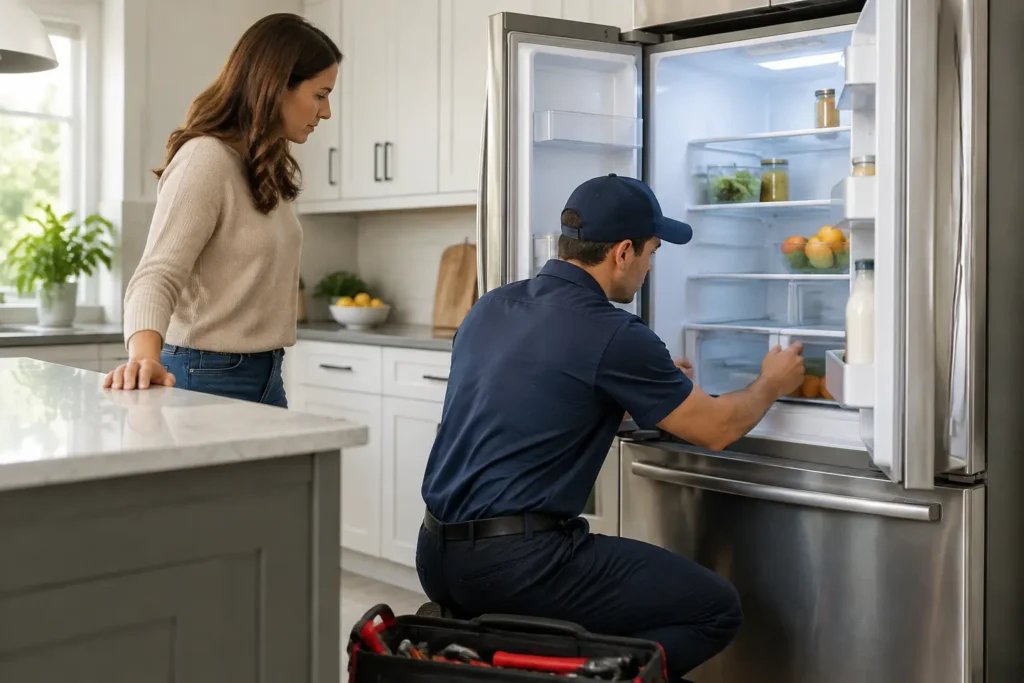
A refrigerator that is not cooling well can put food at risk, but the cause is not always obvious. Before arranging Glendale refrigerator repair, you can check a few everyday conditions without removing panels or handling electrical parts. These checks may reveal a simple setting or airflow issue; they cannot confirm that an internal component is working properly.
Keep food safety in mind while you investigate. The refrigerator should be at 40°F or colder, and the freezer at 0°F. Use an appliance thermometer if available rather than relying only on the control dial or a display. If perishable food has been above 40°F for an extended period, use caution and follow current food-safety guidance.
Start with the simple checks
- Confirm power and settings. Check that the refrigerator light or display is on and that the temperature controls have not been changed accidentally. Avoid setting the controls to their coldest position as a first response; that may not address the cause and can create freezing elsewhere.
- Check airflow inside. Make sure food packages are not pressed against vents. Overpacked shelves can block the circulation that helps keep temperatures even. Leave space around vents and avoid loading warm groceries in large quantities all at once.
- Inspect the doors. Look for packaging, drawers, or shelves that prevent a door from closing fully. Check the gasket for visible dirt, tears, or sections that no longer sit against the cabinet. Wipe away residue with a damp cloth and mild soap; do not pull hard on the seal.
- Consider the surroundings. Heat from direct sunlight or a nearby oven, unusually warm room conditions, or inadequate clearance around the appliance may affect cooling. Consult the owner’s manual for placement and ventilation requirements.
If the refrigerator feels warm
After correcting an open door, blocked vent, or setting, allow time for temperatures to stabilize. The exact recovery time varies with the model, how long the door was open, and how much warm food is inside. Check again with a thermometer rather than repeatedly adjusting the control.
Notice whether the freezer is also warm. If both sections are warming, the issue may involve a shared cooling or airflow system. If the freezer is cold but the fresh-food section is warm, blocked airflow or a problem with how cold air moves between compartments may be involved. Either pattern needs diagnosis if basic checks do not help.
Heavy frost on an interior panel, recurring temperature swings, or a refrigerator that runs for unusually long periods can also point to a fault. Do not chip ice with a knife or other sharp tool, and do not remove interior or rear panels to investigate. Hidden wiring and tubing can be damaged easily.
When food freezes or water appears
Food freezing in the refrigerator section may result from items touching a cold-air outlet, a control set too low, or a temperature-control issue. Move delicate items away from vents and check the thermometer over time. If the problem continues despite reasonable settings and clear airflow, arrange an inspection.
For a small puddle, first check whether a container has spilled or whether the door was left open. If the water returns, note where it appears: inside the compartment, under the front, or near a water dispenser. A clogged or frozen drain, supply-line problem, or other fault may be responsible. If the appliance has a water connection, do not pull it forcefully away from the wall; a kinked or damaged line can leak. Shut off the water supply only if you can reach its valve safely and know which one controls the refrigerator.
Which sounds deserve attention?
Some humming, clicks, and brief changes in fan noise can occur during normal operation. A new grinding, repeated loud clicking, or sound accompanied by rising temperatures deserves more attention. Write down when the sound happens and whether the doors, dispenser, or cooling cycle affect it. Avoid reaching through vents or putting fingers near fans.
Safety limits and professional diagnosis
For any burning smell, visible sparking, damaged cord, or signs of overheating, stop using the refrigerator if you can do so safely. Do not touch wet electrical parts or attempt wiring repairs. If the plug is accessible and dry, unplugging may be appropriate; otherwise, avoid contact and seek qualified help. Do not remove sealed-system components or attempt refrigerant work. Refrigerant circuits require specialized equipment and training.
If temperatures remain unsafe, the same symptom returns, or a leak or unusual noise persists, a qualified appliance professional can test the refrigerator and identify whether a repair is appropriate. Share the model number, temperature readings, and what you have observed. For service information, visit refrigerator repair. If you are in Glendale or a nearby community, you can contact the business to discuss the symptoms and request service; reaching out does not create an appointment until one is confirmed.