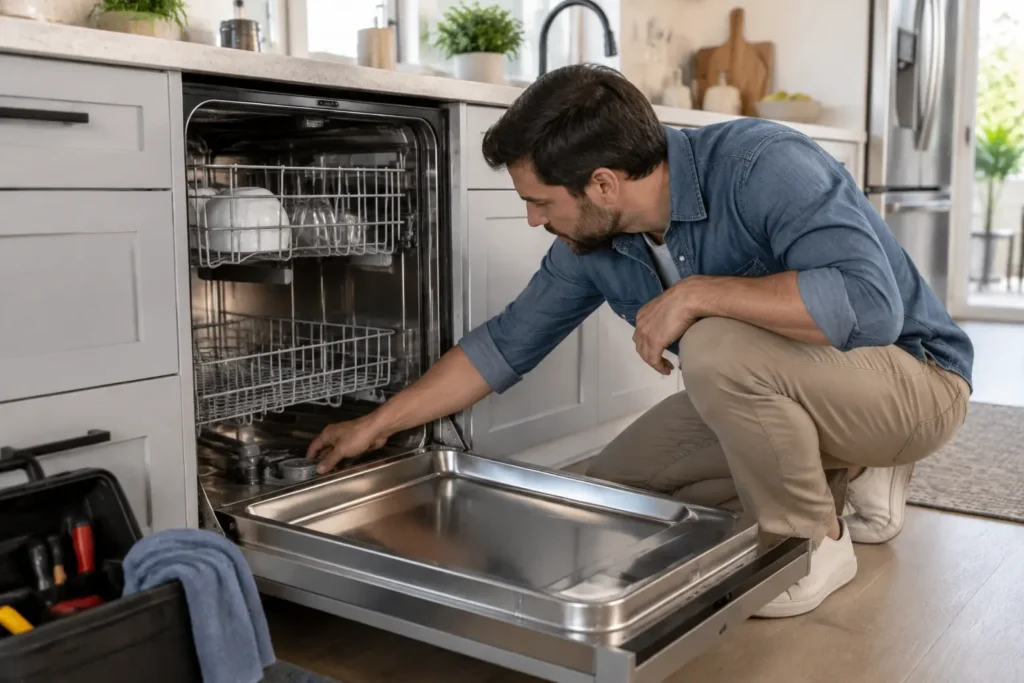
A puddle near the dishwasher can be alarming, but the safest first step is to stop the cycle and limit further water. The source may be something simple, such as excess suds or a blocked door seal, or it may involve a hose, pump, or other part that needs professional attention. These checks can help you narrow down the cause without opening the appliance or working around live electrical components.
Make the area safe first
Press Cancel or Off if the controls are dry and easy to reach. If water is spreading toward an outlet, plug, or electrical parts, do not touch them or stand in the water. If you can reach the home’s breaker panel safely from a dry location, switch off the dishwasher circuit; otherwise, keep clear and contact a qualified professional. Do not pull out a wet, built-in dishwasher to reach its plug.
If you can safely access the dishwasher’s water shutoff valve without moving the appliance, turn it off. Mop up standing water only when doing so does not bring you near electrical hazards. Keep children and pets away from the wet area. Avoid restarting the dishwasher just to see whether it leaks again.
Use timing and location as clues
Once the immediate risk is handled, note when you first saw water. A leak during filling may point to a supply connection or a water inlet issue. Water appearing during washing may be related to spray direction, suds, or the door area. A leak during draining can involve the drain hose or a component inside the machine. These are clues, not a diagnosis, and several problems can produce similar symptoms.
Without removing panels, look for where the water collects: at the front corners, under the door, along the cabinet sides, or near the sink connection. Check the floor and nearby cabinetry for signs of an older leak, such as swelling or discoloration. If you can see a hose connection from an unobstructed, dry area, look for obvious drips or moisture. Do not reach underneath the appliance or tighten connections while it is powered or wet.
Safe checks you can make
- Inspect the door area. When the dishwasher is off and cool, look for food debris on the visible door gasket and the mating surface. Wipe away residue with a soft, damp cloth. Do not use sharp tools, abrasive cleaners, or solvents that could damage the seal.
- Consider detergent and suds. Hand dish soap or too much detergent can create excess foam that escapes around the door. Use only detergent intended for dishwashers and follow the product and appliance instructions. If suds are present, keep the machine off and let them settle; avoid adding household chemicals to the tub.
- Check loading and spray-arm clearance. A tall dish or utensil can prevent the door from closing properly or interfere with a spray arm, directing water toward the seal. With power off, check that items are arranged as the manual recommends and that visible spray arms can move freely. Do not force a stuck part.
- Look for a visible kink or obstruction. If the drain hose is plainly visible in an accessible cabinet under the sink, check whether it is sharply bent or crushed. Do not disconnect it or reach into plumbing if you are unsure how it is fitted.
When to stop troubleshooting
Stop and arrange professional service if the leak returns, water appears underneath the appliance, a hose or connection is damaged, or you cannot identify the source with a visual check. A leak that continues after the dishwasher is off can indicate a supply-side problem; keep the water shutoff closed if it is safely accessible. If water has reached electrical components, do not use the appliance until it has been assessed.
Do not remove the dishwasher’s panels, work on its pump or wiring, or run it while inspecting underneath. Internal repairs can involve sharp edges, water, and electrical hazards. If the appliance is built in, moving it can also strain water and drain lines or damage flooring.
Prevent further damage and choose a next step
Take a photo of the wet area and note the cycle stage, approximate amount of water, and whether the leak stopped when the cycle ended. This information can help a repair professional assess the problem. Keep the dishwasher out of use until the cause is understood, especially if water has reached cabinets or flooring.
For recurring leaks or an unclear source, you can review dishwasher repair service information and decide whether to book an inspection. A qualified technician can check internal seals, hoses, pumps, and water controls without relying on guesswork. If you are in Glendale or a nearby community, you’re welcome to request service when it’s convenient; no appointment is implied by this guide.