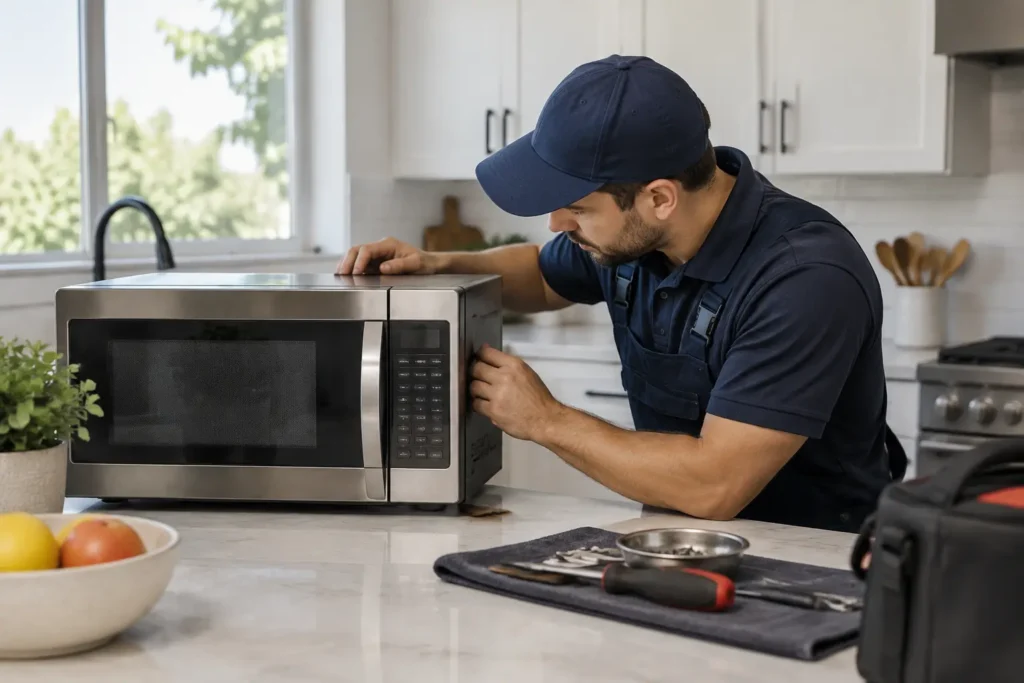
When a microwave stops heating, makes an unusual sound, or will not start, it is natural to wonder what repair might cost. There is no reliable price based on a symptom alone: the same complaint can have different causes, and designs vary by model. Understanding what affects microwave ovens repair cost can help you compare an estimate with the appliance’s age, condition, and replacement options.
Why a symptom is not a diagnosis
A microwave that runs but does not heat may have a fault in a high-voltage component, a control, or another part of the system. A unit that will not start could involve a door-related issue, controls, power supply, or a different failure. These examples are not a way to identify a failed part at home. Similar symptoms can point to different repairs, so a qualified technician generally needs to inspect and test the appliance before giving a dependable estimate.
For this reason, be cautious of a firm repair price offered from a brief description alone. An initial phone discussion may help narrow down possibilities, but it does not confirm the cause or guarantee that a particular part is needed.
What can affect the estimate?
- Diagnosis: Ask whether an inspection or diagnostic charge applies, when it is due, and whether it is credited toward approved repair work. Policies differ, so confirm the terms before arranging service.
- Parts: The suspected part, model-specific design, and parts availability can change the total. Some repairs involve more than one component, and a technician may need to confirm compatibility using the model information.
- Labor and access: The time needed to locate the fault and complete the repair matters. A countertop microwave and a built-in or over-the-range unit can have different access requirements. Do not try to remove an installed unit yourself if it is heavy, hardwired, or awkward to reach.
- Additional findings: Inspection may reveal damage beyond the initial symptom. Ask the technician to explain any change to the proposed work and obtain approval before additional repairs proceed.
- Taxes or other listed charges: Check which charges are included in the written or itemized estimate and which, if any, are separate.
Questions to ask before authorizing work
A useful estimate should explain the diagnosed problem, the proposed repair, and the expected total for the work being recommended. If a diagnosis is not yet confirmed, ask what the initial charge covers and whether more testing could change the estimate. You can also ask whether the quoted amount includes parts and labor, what happens if the appliance needs another part, and whether the repair carries any stated parts or labor coverage. Terms vary; request the details in writing rather than assuming coverage.
Share the microwave’s make and model, where it is installed, and what happens when you use it. Note whether it is a countertop, built-in, or over-the-range unit. This information may help the service provider understand the job, but it still cannot replace an inspection when the cause is uncertain.
Repair or replace?
Compare the full proposed repair total with the cost of a suitable replacement, not just the appliance’s original purchase price. Consider age, condition, size, features, and whether other problems have appeared. For a built-in unit, replacement may also involve installation or cabinet-fit considerations. For a countertop model, replacing the unit may be more straightforward, but the right choice depends on your circumstances.
If the estimate is close to what you would spend on a replacement, ask whether the repair is likely to address the confirmed fault and whether there are known additional concerns. You do not have to authorize work immediately; taking time to review an itemized estimate can help you decide. If the microwave may still be covered by a manufacturer or retailer plan, check its terms before authorizing outside work, since coverage rules differ.
Safe checks you can make
Without opening the cabinet, check that the controls are set as intended, the door closes normally, and any child lock or timer setting is not preventing operation. If the outlet or cord appears damaged, do not touch or use the appliance. A breaker that has tripped can be noted, but repeated resetting is not a safe troubleshooting strategy. Stop using the microwave if it sparks, smells burnt, produces smoke, or has a damaged door, latch, or seal.
Never remove a microwave’s outer cover or attempt to test or replace internal high-voltage parts. Dangerous voltage can remain even when the appliance is unplugged. Do not bypass door interlocks. If there is smoke or a fire, keep the door closed; if danger continues, move away and contact emergency services. For electrical concerns or internal faults, use a qualified professional.
Arrange a professional assessment
If you would like a qualified assessment, you can learn about microwave repair service and ask what information is useful before booking. There is no need to commit to a repair until you understand the diagnosis and estimate. A clear explanation of the options can help you decide whether repairing the microwave makes sense for your home in Glendale or a nearby community.