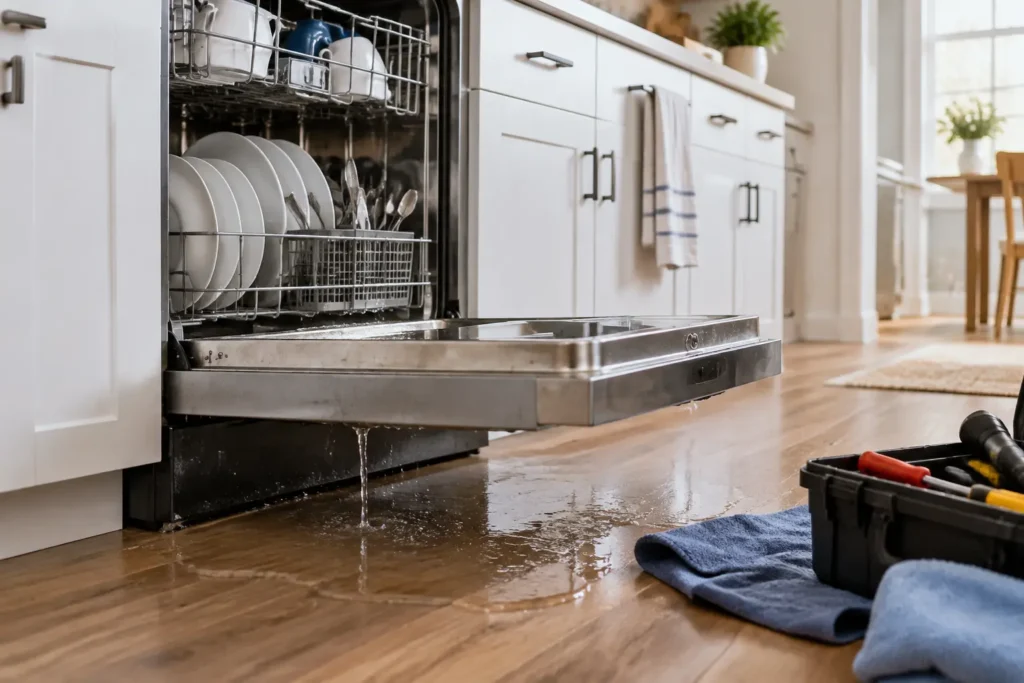
A leaking dishwasher can leave water under cabinets or across the kitchen floor, but the visible puddle does not always show where the leak began. The first priorities are limiting water damage and avoiding electrical hazards. Once the area is safe, a few observations can help narrow down the problem before you decide whether to arrange leaking dishwasher repair.
Make the area safe first
If water is spreading, stop the dishwasher using its normal controls if you can reach them without stepping into water. If you know the dishwasher’s water shutoff valve under the sink and can reach it safely, turn it off gently. Do not force a stuck valve. If the floor, outlet, plug, or nearby wiring is wet, do not touch the plug or appliance. Keep people and pets away and contact a qualified professional; use the home’s electrical panel only if it is dry, accessible, and safe to approach.
Do not run another cycle to reproduce a leak. Avoid pulling the dishwasher out, removing panels, or reaching underneath it. Water and electricity are a hazardous combination, and a hidden leak can damage flooring or cabinetry even when the puddle looks small.
Note when and where water appears
After stopping the appliance, observe the area from a safe position. If you can do so without moving the dishwasher, blot up standing water and note where it first appears. Take a photo if that is safe and useful. The timing can be as informative as the location:
- During filling: Water may be related to the incoming supply, an internal fill component, or water entering the tub in an unusual way.
- During washing: A door-area leak can be associated with the seal, the door closing unevenly, or water being directed toward the door.
- During draining: A drain hose, connection, or drain-related component may be involved. Water backing up at the sink can also point to a drainage issue outside the dishwasher.
- After the cycle ends or while idle: A continuing supply-side leak is possible, so leave the dishwasher off and shut off its water supply if you can do that safely.
These are clues, not diagnoses. Water can travel beneath the machine before becoming visible, and several different faults can produce a similar puddle.
Safe visual checks you can make
With the dishwasher off and the floor dry, check the visible door area for food debris, a displaced item, or obvious damage to the gasket. A plate, utensil, or rack that prevents the door from closing evenly can sometimes direct water outward. Remove only an item you can reach without putting your hands near sharp edges or moving parts. Do not pry at the seal or use tools to reshape it.
Consider whether the correct detergent was used and whether more than the recommended amount was added. Hand dish soap and excessive detergent can create suds that escape through the door. If suds are visible, keep the appliance off and follow the owner’s manual for cleanup guidance; do not add chemicals or run repeated cycles in an attempt to clear the problem.
From outside the cabinet, look for visible moisture around the sink-side area or along accessible plumbing connections. Do not disconnect hoses, tighten fittings, or reach behind the appliance. If water is coming from a pipe or valve rather than the dishwasher, a plumber may be the appropriate professional.
When to stop troubleshooting
Leave the dishwasher off and arrange professional help if the source is underneath the unit, water keeps returning, a hose or connection appears damaged, the door seal is torn, or the leak is close to electrical parts. Stop immediately if you notice a burning smell, sparks, a tripped breaker, or any sign of electrical damage. Do not remove an access panel to investigate.
When requesting service, share the model number if it is safely visible, when the leak occurs, and whether the water looks clean or contains suds or food residue. Mention any recent change, such as a new detergent or a load that may have blocked the door. These details can help guide an inspection, but they cannot confirm the cause without examining the appliance.
Prevent further damage while you wait
Keep the dishwasher unused until the leak is understood. Dry accessible floor surfaces, move items that could be damaged by moisture, and watch for water spreading into adjoining cabinets. If flooring is swelling, a ceiling below is affected, or water continues despite the dishwasher being off, address the water source promptly and consider help from the relevant building or water-damage professional.
For a persistent leak, a qualified appliance professional can inspect the door, water supply, drain path, and internal components without relying on guesswork. Learn more about dishwasher repair service or contact the business to discuss the symptoms and request an appointment. No booking is made until you arrange one directly.