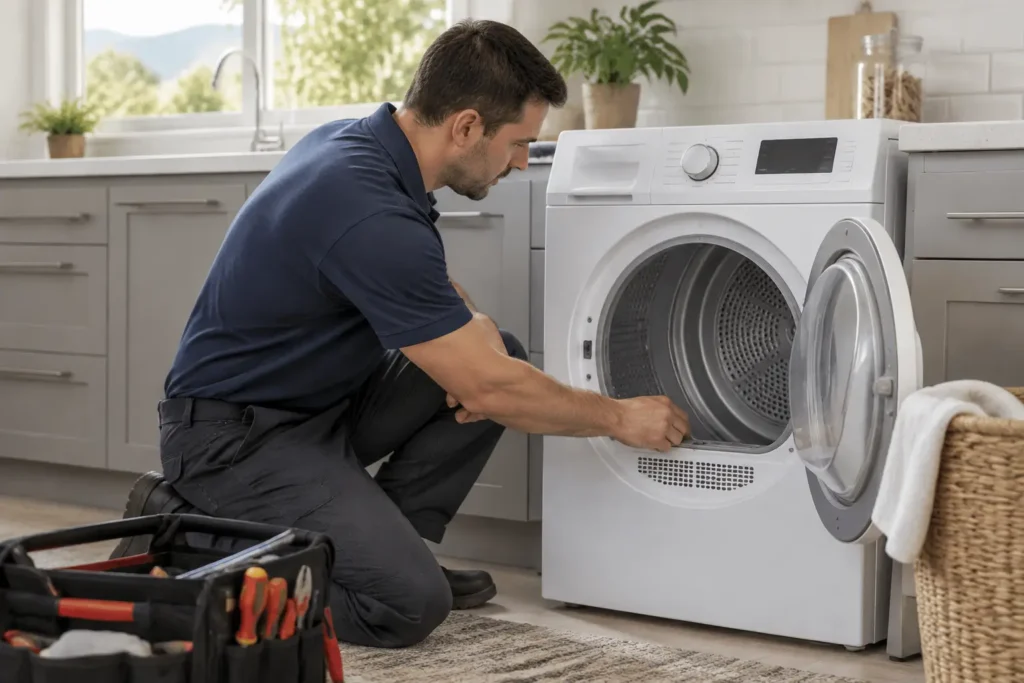
A dryer that will not start, produces no heat, or leaves clothes damp can disrupt a household routine. In La Crescenta-Montrose, a few basic observations may help narrow down the issue before arranging service. Begin with checks that do not require opening the appliance, moving heavy equipment, or handling wiring or gas components.
Safety comes first: Stop using the dryer if you notice a burning smell, smoke, sparking, a hot or damaged power cord, or unusual heat around the appliance. Do not open electrical panels or attempt repairs involving live circuits. If you smell gas, leave the area without operating switches or creating a flame, then contact your gas utility or emergency services from a safe location.
Start with the simplest checks
Make sure the door is fully closed and the selected cycle is appropriate for the load. Check that the controls have not been set to a delay, pause, or wrinkle-prevention option that changes how the dryer operates. If the display shows an error code, write it down; it may help a qualified repair professional assess the problem.
For an electric dryer, you can look at the home breaker panel without removing its cover. Some dryers use a two-pole breaker, and a partial trip may affect heating even if the drum still turns. If a breaker is tripped, follow its normal reset procedure once. If it trips again, leave it off and call a qualified professional rather than repeatedly resetting it. Do not inspect or alter the outlet or power cord.
If clothes take too long to dry
Restricted airflow is one possible reason a dryer needs more than one cycle. Clean the lint screen before or after each load, following the appliance instructions. If fabric softener or dryer sheets have left residue, clean the screen as directed by its manufacturer and let it dry fully before reinstalling. A screen can appear clear but still have buildup that limits airflow.
When the dryer is off and cool, check only the visible, accessible section of the vent for obvious crushing, kinks, or lint accumulation. Do not dismantle the duct or pull a heavy dryer away from the wall to reach it. Vent materials and installation requirements vary; damaged or unsuitable ducting should be assessed and corrected by a qualified professional. Avoid operating the dryer with the vent disconnected, and do not substitute plastic or foil ducting for an appropriate vent.
If the exterior vent outlet is safely accessible, check for a visible obstruction while the dryer is off. Do not reach into the duct, climb to a risky location, or remove a guard that you cannot reinstall properly. Lint buildup farther inside the vent system can need professional cleaning. A hot laundry area, weak airflow at the outlet, or repeated long drying times are reasons to stop using the dryer until airflow has been checked.
When the drum turns but there is no heat
First confirm that the cycle is not set to air-only or another no-heat setting. If the setting is correct and the dryer still produces no heat, the cause could involve an electrical, gas, airflow, or internal component fault. These possibilities cannot be reliably diagnosed by looking at the outside of the appliance. Avoid removing panels or testing components yourself.
For a gas dryer, never disconnect the gas line, adjust a valve beyond normal user controls, or try to relight internal components. If the appliance smells of gas, stop troubleshooting and follow the safety steps above. Otherwise, arrange an inspection if it operates without heat or the problem returns.
If the dryer will not start or stops early
Check that the door closes securely and that the controls are set as intended. If the dryer remains unresponsive, makes repeated clicking sounds, or stops during a cycle, there may be a fault with a control, door-sensing, power, or other component. Do not bypass a door switch or safety device. A dryer that stops unexpectedly, especially alongside unusual heat or odors, should be left off until it can be assessed.
Before seeking help, note whether the drum turns, whether any heat is present, when the problem occurs, and whether an error code appears. Mention recent changes such as moving the appliance or changing the vent, if relevant. These observations are useful, but they do not replace a professional diagnosis.
When to arrange professional service
Request qualified help if basic checks do not resolve the issue, a breaker trips again, airflow seems restricted beyond the accessible area, or the dryer shows signs of overheating. Internal electrical and gas repairs require appropriate training and procedures. For more information about available dryer repair service, you can review the service page and contact the business if you would like to discuss your appliance or book service. No appointment is assumed or reserved by reading this guide.
Until the cause is understood, avoid repeated cycles that leave clothes unusually hot or damp, and do not run the dryer unattended if it has been behaving abnormally. Safe observations can help describe the problem; leaving hazardous or internal repairs to a qualified professional helps protect both the household and the appliance.