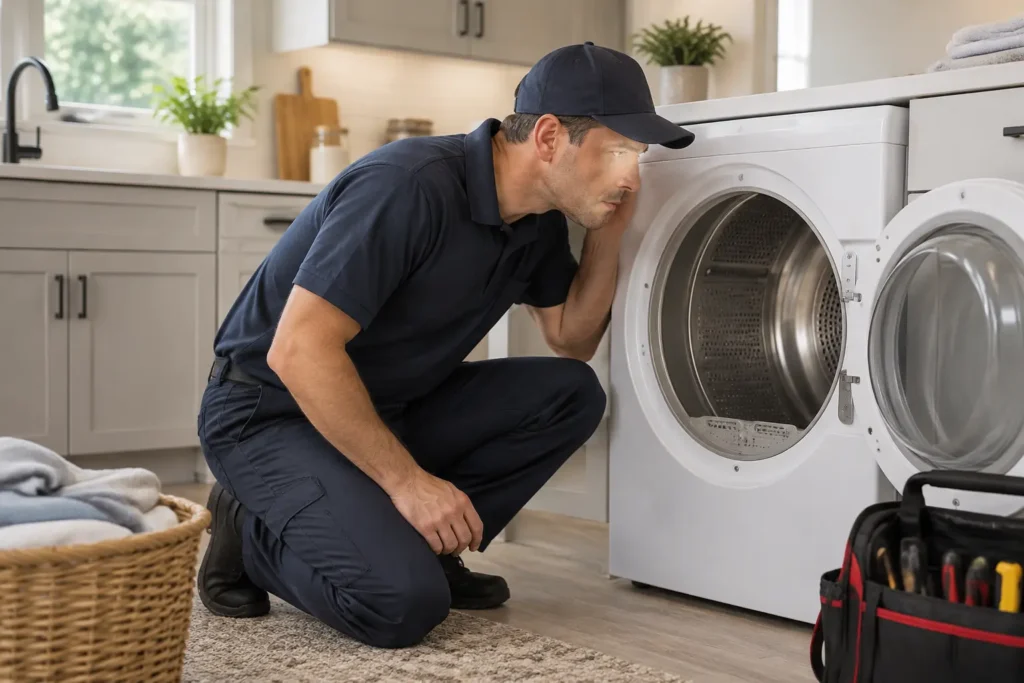
A dryer that suddenly sounds different can be unsettling, especially when a load is already in progress. A thump, squeal, scrape, or rattle may come from something as simple as an object in the drum, but similar sounds can also occur when a component is worn or loose. The sound alone cannot confirm the cause. A few careful observations can help you decide whether to stop the cycle and arrange an inspection.
This guide covers safe checks for homeowners in Glendale and nearby communities. It does not require opening the cabinet or attempting repairs inside the appliance.
First, make the situation safe
If the dryer is making a loud scraping, grinding, or repeated banging sound, stop the cycle. Let the drum come to a complete stop before opening the door. Do not reach into a moving drum or remove panels to look for the source.
- If you notice smoke, sparks, a burning smell, or an unusually hot exterior, stop using the dryer. If it is safe to do so, switch it off and disconnect power at the plug without touching a hot or damaged cord. Get qualified help.
- If you smell gas near a gas dryer, leave the area and contact your gas utility or emergency services from a safe location. Do not operate switches, unplug the dryer, or try to find the leak.
- For any electrical damage, exposed wiring, or repeated tripping of a breaker, do not continue testing the appliance. Contact a qualified professional.
Note when the sound happens
Once the dryer is off and safe to approach, think about the timing. Does the noise occur as soon as the drum turns, only when the dryer is warm, or at the start of each rotation? Does it change with a heavier load? These details can help a repair professional narrow the possibilities, though they are not a diagnosis.
Thumping or rhythmic knocking
A steady thump may happen when bulky items, such as towels or bedding, bunch up and tumble unevenly. Pause the dryer, redistribute the load, and check that the appliance is sitting level without rocking. If the sound continues with a small, balanced load—or the drum seems to strike the cabinet—stop using the dryer and arrange an inspection.
Rattling or clinking
Coins, buttons, or other small objects can make noise as they move in the drum or near the door opening. With the dryer off, check the drum and door area for loose items. Look over pockets before future loads, too. A rattle that persists after removing visible objects may come from an internal part, so avoid trying to reach beyond the accessible drum area.
Squealing, squeaking, or grinding
A high-pitched squeal or rough grinding sound can be consistent with wear or friction inside the dryer, but several parts could be involved. If the noise is new, persistent, or getting louder, do not run repeated cycles to see whether it goes away. Continued operation could worsen damage. A professional inspection is the safer next step.
Buzzing or humming
A brief hum during normal operation may be different from a loud, persistent buzz. If the drum does not turn, the dryer struggles to start, or the sound comes with a hot or burning odor, stop using it. Do not remove the cabinet or handle electrical components to investigate.
Safe checks you can make
With the dryer switched off and cool, remove items from the drum and check for objects you can see and reach without tools. Clean the lint screen according to the manufacturer’s instructions. A blocked lint screen or restricted exhaust can affect drying and contribute to overheating, although it may not explain a mechanical noise.
If the exterior vent outlet is safely accessible, check that it is not obviously blocked. Do not climb, dismantle ductwork, or move a gas dryer to inspect behind it; moving the appliance can strain a gas connection or vent. For vent cleaning or a suspected obstruction, ask a qualified professional for help.
Keep notes about the sound, when it occurs, the load type, and any warning lights or changes in drying time. If you can record the noise from a safe distance without continuing a concerning cycle, that recording may be useful when describing the problem.
When to request service
Arrange service if a new noise persists after simple checks, the drum is difficult to turn by hand when the appliance is off, the dryer vibrates excessively, or clothes are taking much longer to dry. Stop using it sooner if there is grinding, severe banging, smoke, burning odor, or a gas smell. A technician can inspect the appliance and explain the likely cause and repair options before work proceeds.
For help assessing a noisy dryer, you can learn more about dryer repair service and request an appointment if you choose. Until the cause is understood, avoid running the dryer when the noise is severe or accompanied by a safety warning.