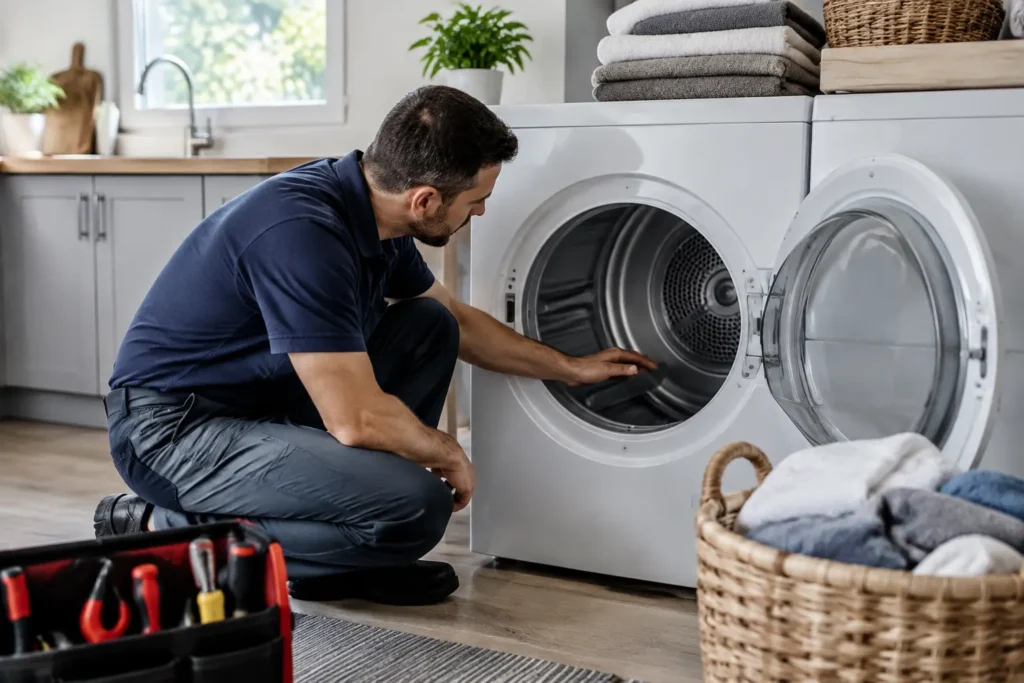
If your dryer makes noise, the sound and the moment it occurs can help you decide what to do next. A light rattle may have a simple explanation, while persistent scraping, squealing, or heavy thumping can signal a mechanical problem. Sound alone cannot confirm which part is at fault, so treat these clues as a way to assess urgency—not as a diagnosis.
Before checking anything, consider safety. Stop the cycle if the dryer is unusually loud, smells hot or smoky, or appears to shake excessively. Do not reach into the drum while it is moving, remove panels, or attempt repairs involving wiring or internal parts. For an electrical concern, gas odor, or other suspected hazard, stop using the appliance and contact a qualified professional.
Notice when the sound happens
Pay attention to whether the noise begins at startup, continues as the drum turns, changes with the size of the load, or occurs only as the cycle ends. If it is safe to do so, note whether the dryer was empty or loaded and describe the sound in ordinary terms. This information can help a service professional narrow down what to inspect.
- Rattle or clink: A loose object in a pocket, zipper, button, or item resting on the dryer may make intermittent noise. Check the load and the area around the appliance for obvious objects.
- Thumping: A bulky or unevenly distributed load can tumble unevenly. Pause the dryer, wait for the drum to stop, and rearrange the items. If thumping continues with a small, balanced load, stop the machine and seek an assessment.
- Squeal or squeak: A recurring high-pitched sound can have several causes, including wear in a moving component. If it persists or grows louder, avoid running repeated cycles to see whether it goes away.
- Scraping or grinding: A harsh, continuous sound is a reason to stop the dryer. Do not try to locate the source by reaching inside gaps or opening the cabinet.
- Buzz or hum: A brief sound may occur during normal operation, but a new or prolonged electrical-sounding hum—especially with heat, a burning smell, or trouble starting—calls for stopping use and arranging qualified service.
Safe checks you can make
Check the load and drum
With the cycle stopped and the drum no longer moving, remove the laundry and look for coins, clips, or other loose items. Check pockets before putting clothes back in. Make sure the load is not bunched into one heavy bundle, and avoid overloading; both a tangled load and an overloaded drum can contribute to uneven movement. If the sound occurs when the dryer is empty, or returns with a balanced load, it is less likely to be explained by the laundry alone.
Look around the outside
Check that the dryer is not touching a wall, cabinet, or object that could vibrate against it. Look for items sitting on top that might rattle. From outside the appliance, notice whether it appears unstable or has shifted. Do not tilt or move a heavy dryer by yourself. If the unit seems unsteady, or you see damaged cords, stop using it and get help rather than trying to adjust internal or electrical components.
Check the lint filter and accessible vent area
Remove lint from the filter as directed in the owner’s manual. You can also look for an obvious obstruction at the accessible vent opening, but do not force tools deep into the duct or dismantle the vent system unless you are equipped to do so safely. Restricted airflow can affect drying and may create a safety concern, although it does not by itself explain every noise. If the outside vent is hard to reach or the duct seems blocked, arrange appropriate cleaning or service.
When to stop and call for service
Stop the dryer and leave it off if the sound is loud, worsening, or accompanied by burning odor, smoke, sparks, unusual heat, a damaged power cord, or repeated failure to start. Do not continue cycling the appliance to test it. If you smell gas near a gas dryer, do not operate switches or try to investigate the appliance; leave the area and contact the gas utility or emergency services according to local guidance. A qualified professional should assess suspected electrical or gas problems.
For a persistent mechanical noise without an immediate hazard, avoid opening the dryer cabinet. Internal components can move, retain heat, or involve electrical connections, and the cause may not be visible from the drum. Write down when the noise occurs, whether it changes with the load, and any other symptoms such as longer drying times. These details can make a service conversation more useful.
Deciding on the next step
A single clink that disappears after removing a loose object may not require repair. A repeated squeal, grinding sound, or thump that continues after safe load checks deserves attention, especially if performance changes too. If you are in Glendale or a nearby community and want a professional assessment, you can learn about dryer repair service and contact the business to discuss your concern. A service request is only a first step; the appliance needs to be assessed before anyone can identify the cause or recommend a repair.
In short, listen for timing, check the load and accessible areas with the dryer stopped, and take warning signs seriously. When a noise persists or safety is uncertain, leaving the dryer off is often the most prudent choice.