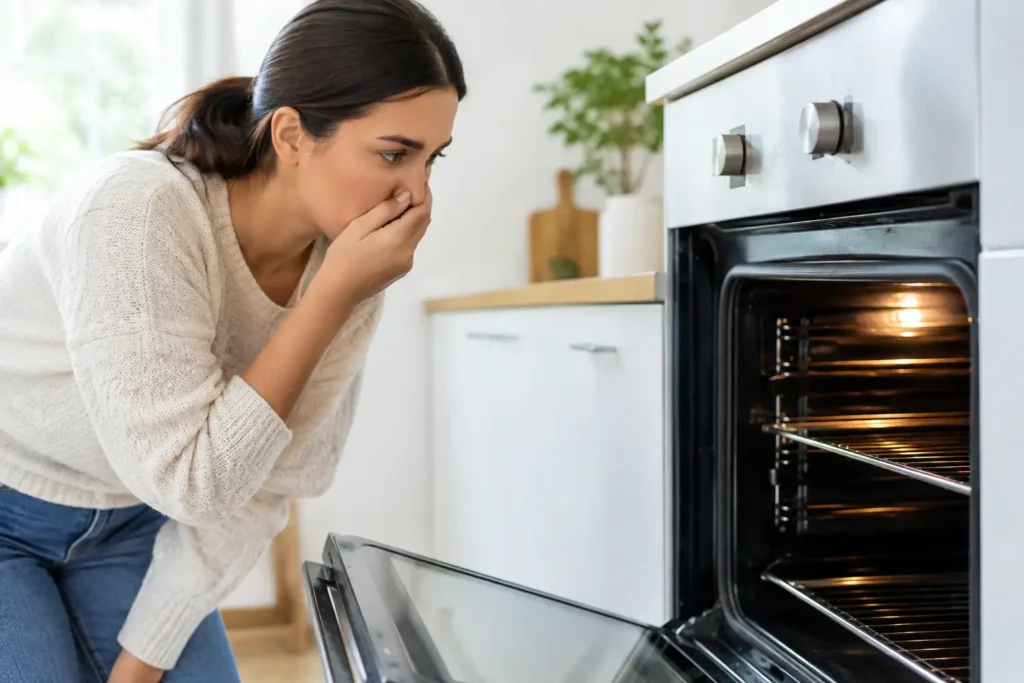
A brief oven gas smell right as a burner lights can happen. A gas odor that stays in the kitchen, returns after the oven is off, or becomes strong is different. Treat it as a safety issue first, not a cooking inconvenience. Do not try to cook through the smell or keep restarting the oven to see whether it clears.
What to Do When You Smell Gas From an Oven
If the smell is strong, you hear a hissing sound, or anyone feels dizzy, nauseated, or has a headache, get people and pets out of the home right away. Do not turn lights, fans, or appliances on or off. Do not use a phone inside the home, light a match, smoke, or start a vehicle in an attached garage. From a safe location, call 911, the fire department, or your gas utility’s emergency line.
For a mild odor that appears to be limited to the oven, turn every oven and surface-burner control to OFF. If it is safe to do so and you know where it is, shut off the gas supply valve behind the range or at the appliance connection. Open doors and windows as you leave the area. Do not return to use the appliance until the odor is gone and the source has been checked.
A gas smell is not a problem to solve with tape, household cleaners, or repeated attempts to relight the oven. Gas appliances need the right fuel flow, ignition, ventilation, and connections. A failure in any one of those areas can create a risk.
When a Small Smell May Be Normal
With many gas ovens, you may notice a faint odor for a second or two while the burner ignites. That can occur because gas begins flowing just before the igniter lights the burner. The odor should disappear quickly once there is a steady blue flame or the oven is heating normally.
It is not normal if you smell gas for more than a few seconds, if the oven takes a long time to ignite, or if the smell comes back during preheating. It is also not normal to smell gas when the oven has been off for a while. Those signs call for professional diagnosis.
Older ranges with standing pilot lights can have different operating characteristics than newer electronic-ignition models. The safety response does not change: a persistent odor means stop using the appliance and have it checked.
Common Reasons an Oven Smells Like Gas
A weak or failing igniter is one of the most common causes. On many gas ovens, the igniter must become hot enough to open the safety valve fully and light the burner. When it weakens, gas may flow slowly while the burner delays ignition. You may notice a gas smell, a long preheat time, or a burner that lights late with a small whoosh.
Clogged or misaligned burner ports can also cause delayed ignition. Food debris, grease, and oven-cleaning residue can interfere with how gas reaches the flame. The burner may light unevenly, leave unburned gas briefly in the oven cavity, or produce an irregular flame.
The issue may be a burner valve, safety valve, regulator, gas line connection, or damaged supply hose. These problems are not visible in every case, and they should not be tested by loosening fittings or applying an open flame. A technician can inspect the appliance, ignition sequence, burner operation, and accessible connections with the right equipment.
Sometimes the source is not the oven itself. A cooktop burner may have been left slightly open, a control knob may not be fully in the OFF position, or the odor may be coming from another gas appliance. If you cannot identify the source quickly and safely, leave the home and contact the gas utility or emergency services.
Gas Smell vs. Other Oven Odors
Not every unpleasant oven odor is natural gas. A new oven can produce a factory coating smell during its first heating cycle. Spilled food, grease, plastic packaging, and cleaner residue can create smoke or chemical odors. Electrical problems can smell like hot plastic or burning insulation.
Those odors still deserve attention, especially if there is smoke, sparking, or a burning smell that does not stop. Turn the appliance off and let it cool. But natural gas has a distinctive sulfur or rotten-egg odor added to make leaks easier to detect. If that is what you smell, use gas-safety precautions rather than assuming it is burned food.
Carbon monoxide has no odor. That is why a working carbon monoxide detector is a smart safety measure in any home with gas appliances. Do not rely on your sense of smell to identify every combustion problem.
Do Not Try These Quick Fixes
Do not keep turning the oven on and off to force ignition. Each attempt can allow more unburned gas to collect before the burner lights. Do not insert objects into burner openings, disassemble gas valves, or attempt to adjust gas pressure yourself.
Avoid spraying water, degreaser, or cleaning solution near ignition components while the range is connected to power and gas. Cleaning can be part of regular maintenance, but it does not replace repair when an oven has delayed ignition or an ongoing gas odor.
You should also avoid using the oven until a repair is completed simply because the smell disappeared after airing out the room. Intermittent ignition and connection problems often return, usually when the appliance is needed most.
What a Qualified Appliance Technician Checks
A proper service visit starts with the symptom: when the odor occurs, how long it lasts, whether the oven lights, and whether the cooktop has similar issues. That information helps narrow down the fault without guessing.
The technician may inspect the bake and broil ignition systems, burner condition, wiring, safety valve operation, control settings, and gas supply connection. Flame appearance matters too. A stable blue flame usually indicates proper combustion, while yellow, uneven, lifting, or delayed flames may point to a burner, air-flow, or fuel-delivery issue.
The repair depends on the model and the failed part. An igniter replacement can be a straightforward repair on some ranges. A damaged valve, regulator, or gas connection may require a different approach. The right answer is based on diagnosis, not on replacing parts until the smell seems to stop.
For Glendale homeowners, renters, and property managers, Albert Pogosov Appliance Repair provides direct technician service for residential ovens, ranges, and cooktops. You deal with the person handling the diagnosis and repair, without a dispatch-company middleman. Same-day availability may be possible when scheduling allows, and an approved repair includes a free estimate.
How to Prevent Future Oven Gas Odors
Keep the oven cavity and burner area reasonably clean, especially after spills. Grease and food particles can affect burner performance and create odors that make a real gas problem harder to recognize. Use oven cleaners only as directed by the manufacturer, and allow the appliance to air out fully after cleaning.
Pay attention to changes in how the oven starts. A longer preheat time, clicking without ignition, delayed flames, or a burner that suddenly sounds different are useful warning signs. Calling for service early can prevent a no-heat problem and reduces the temptation to keep using an appliance that is not operating correctly.
If you rent, report a recurring gas odor to your landlord or property manager promptly and stop using the oven. Property managers should document the complaint and arrange qualified service rather than asking residents to test the appliance themselves.
A gas oven should light reliably, heat evenly, and leave no lingering gas odor in the kitchen. If yours does not, shut it down, ventilate the area, and get the appliance checked before the next meal depends on it.