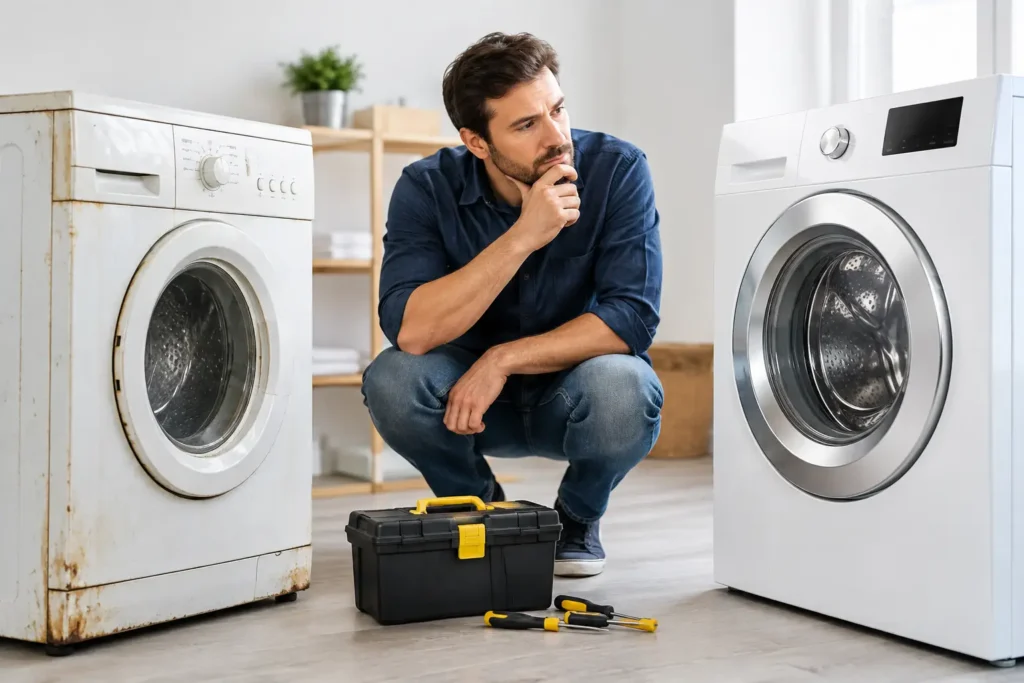
A washer that quits halfway through a load creates an immediate problem: wet clothes, a backed-up laundry schedule, and a question that usually cannot wait. Should you repair or replace old washer equipment when it starts leaking, shaking, refusing to spin, or leaving clothes dirty? The right answer depends on the machine’s age, the failed part, the repair estimate, and whether the washer has been reliable up to this point.
For many Glendale households, a professional repair is the more practical choice. A new washer is a major purchase, and a problem that looks serious can sometimes be fixed with one service visit. But there are situations where putting more money into an aging machine does not make financial sense. A clear diagnosis comes first.
When Repairing an Old Washer Makes Sense
Repair is often the better option when the washer is under about eight years old, has been dependable, and needs a repair that is straightforward. Drain pump problems, faulty door locks, worn belts, damaged hoses, clogged drain systems, and certain control issues can frequently be repaired for much less than the cost of replacement.
A washer that will not drain, for example, may have a blocked pump filter, an obstruction in the drain hose, or a failed drain pump. Those are very different repairs, with very different costs. The same is true when a washer will not spin. An unbalanced load may be the only issue, while a worn suspension system, lid switch, motor component, or control board may require service.
The machine’s overall condition matters as much as the individual symptom. If the cabinet is solid, the drum bearings are quiet, the washer does not have rust or repeated leaks, and it has not needed frequent repairs, fixing one failed component can extend its useful life. This is especially true if the model fits your laundry space well and you are otherwise happy with its cleaning performance.
A repair can also be the sensible choice for a newer high-efficiency washer. These machines may cost more to replace, and replacing a serviceable unit just because it displays an error code is rarely necessary. Error codes point toward a system that needs attention, not automatically toward a machine that belongs at the curb.
Signs It May Be Time to Replace the Washer
Most residential washers last roughly 10 to 13 years, although maintenance, usage, and model quality can move that number in either direction. A household that runs multiple loads every day will put more wear on a washer than a one- or two-person home. Once a unit reaches the later part of its expected lifespan, larger repairs deserve a closer look.
Replacement may make more sense when the washer has a major mechanical failure. A loud grinding or roaring sound during spin can indicate worn tub bearings. A damaged transmission, cracked outer tub, severe corrosion, or a failed main control board can also be expensive repairs, especially on an older model. Parts availability can become another issue as a washer ages.
Consider replacement if the washer has developed a pattern of problems. One repair after years of reliable use is normal. Several service calls in a short period are different. A machine that has recently needed a pump, then a lock, then a control repair may continue to demand attention. The repair bill is not just the current estimate. It is the current estimate plus the risk of what may fail next.
Leaks need prompt attention regardless of the washer’s age. A loose hose or worn door boot may be repairable. But recurring leaks around a corroded tub, damaged bearing seal, or cracked internal component can lead to floor damage and mold concerns. Do not keep running a leaking washer and hope the problem stays small.
Use the Repair Cost Rule Carefully
A common guideline is to replace a washer when the repair cost reaches 50 percent or more of the price of a comparable new machine. It is a useful starting point, but not a hard rule.
For example, spending $300 to repair a seven-year-old washer that has otherwise been trouble-free may be reasonable if a comparable replacement costs $900 or more. Spending the same $300 on a 13-year-old machine with noisy bearings and repeated error codes may not be a good investment.
Also account for delivery, installation, haul-away, and possible changes to hoses, electrical connections, or laundry-room fit. The advertised price of a new washer is not always the final cost. On the other hand, a replacement may bring lower water use, better spin performance, and a new warranty. Those benefits are real, but they should be weighed against the actual repair needed, not assumed because the existing machine is old.
Common Problems That Usually Need Diagnosis First
Some washer symptoms sound like a replacement problem but are not. A no-start condition can come from a tripped breaker, outlet issue, defective lid switch, door lock, or control problem. Clothes coming out too wet may point to a drainage restriction or an imbalance rather than a failed motor.
Poor cleaning can be caused by overloading, too much detergent, cold-water supply issues, or a partially blocked inlet screen. A musty smell often comes from detergent buildup and moisture left inside the machine, though a worn door gasket may need replacement. Excessive vibration may be corrected by leveling the washer, adjusting the load, or repairing worn suspension parts.
There are also symptoms that should not be ignored. Burning smells, visible smoke, repeated breaker trips, water near electrical connections, or a drum that moves excessively can signal a safety issue. Stop using the washer and arrange for professional service. Continued operation can turn a manageable repair into a larger failure.
Repair or Replace Old Washer: Questions to Ask
Before approving a repair or shopping for a replacement, get clear answers to a few practical questions. How old is the washer? What part has failed? Is the repair likely to solve the whole issue, or is there evidence of additional wear? Are the needed parts available? What is the total installed cost of a comparable replacement?
It also helps to think about your household’s immediate needs. If your washer is essential for a family with children, a repair that can be completed quickly may have more value than waiting for a delivery window. If you are a landlord or property manager, the decision may come down to reliability, tenant disruption, and the long-term cost of repeated service calls.
A qualified technician should explain the diagnosis in plain language and give you room to make the decision. You should not have to guess whether an estimate covers the real problem or simply the first visible symptom.
Get a Clear Answer Before You Spend More
The best decision starts with an accurate diagnosis, not an assumption based on the washer’s age. Albert Pogosov Appliance Repair provides direct technician service for Glendale homes, rentals, and residential properties. You can discuss the problem with the person handling the repair, get a practical recommendation, and decide whether fixing the washer is worth it.
If the repair is reasonable, you can keep a useful appliance working without taking on the cost of replacement. If replacement is the smarter move, you will know why before investing more money in a machine near the end of its service life. A clear estimate and an honest assessment can make laundry day a lot less stressful.