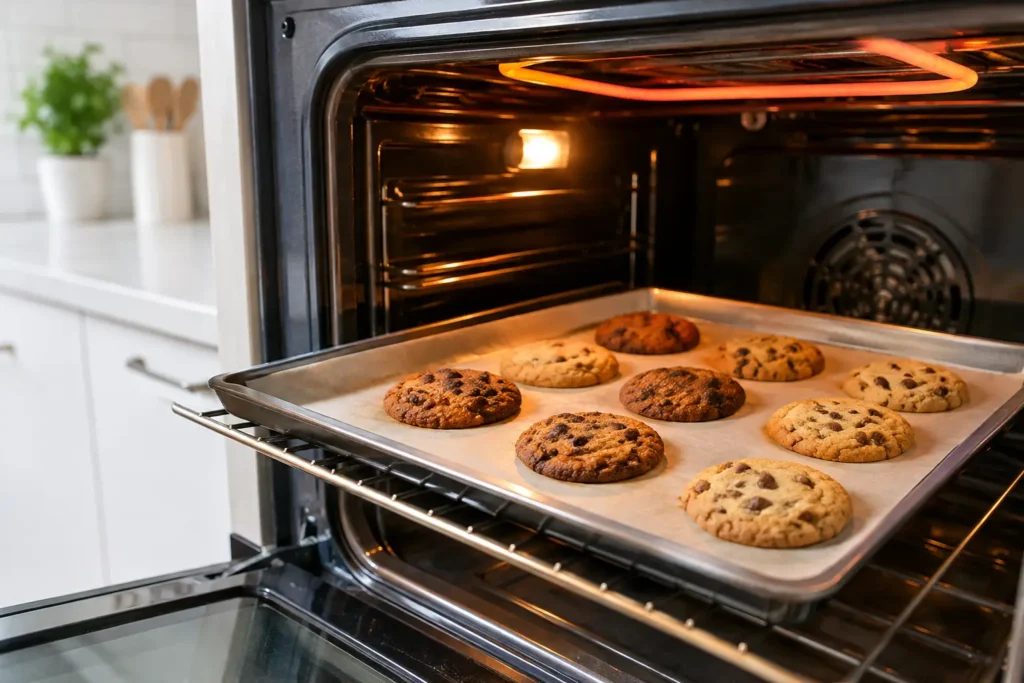
A pan of cookies browns on one side while the other side stays pale. A casserole is bubbling at the edges but cold in the center. When you are dealing with uneven oven heating, changing the recipe or turning the pan may help once, but it does not fix the appliance problem behind it.
Ovens are supposed to hold a stable temperature and distribute heat predictably. Small differences are normal, especially in older units, but repeated hot spots, undercooked food, burned edges, or unusually long cook times deserve attention. The problem may be as simple as a dirty door seal or as involved as a failing heating element, sensor, control board, or convection fan.
What Uneven Oven Heating Looks Like in Real Use
Uneven heat does not always mean the oven will fail to turn on. Many ovens still heat, but they do it poorly. You may notice that food burns on the lower rack, takes much longer than usual on the upper rack, or cooks unevenly even after you rotate the pan.
Temperature swings are another common sign. If a recipe calls for 350 degrees but the oven repeatedly runs far hotter or cooler, baking becomes unreliable. Cakes may sink, bread may brown before it is baked through, and roasted food can dry out while waiting for the center to cook.
Pay attention to whether the issue happens in bake mode, broil mode, or both. That detail helps narrow the diagnosis. A problem limited to bake often points toward the lower bake element or its connections. Poor performance in multiple modes can involve the temperature sensor, control, power supply, door seal, or airflow.
Common Causes of Uneven Oven Heating
A weak or damaged bake element
In an electric oven, the lower bake element does most of the work during standard baking. A failed element may be visibly cracked, blistered, or burned through. But it can also be weak without obvious damage, heating only part of its length or cycling off too early.
Do not touch or test internal electrical parts with the range connected to power. A qualified technician can check element continuity, wiring, and voltage safely. Replacing an element can be a reasonable repair when the rest of the oven is in good shape.
A failing temperature sensor or thermostat
The sensor tells the control how hot the oven is. When it reads the temperature incorrectly, the oven may shut off too soon, overheat, or cycle inconsistently. This can create the frustrating situation where the display says 350 degrees but the actual cavity temperature is nowhere close.
Some ovens allow limited temperature calibration through the control panel. Calibration is useful for a small, consistent difference, such as an oven that runs 15 degrees low. It is not a cure for major swings or erratic readings. If the temperature jumps around, a sensor or control problem is more likely.
A door that does not seal properly
A worn, torn, hardened, or loose oven gasket lets heat escape. The oven then works harder to maintain temperature, and the heat pattern inside becomes less stable. You may feel excessive heat around the door, see steam escaping during cooking, or notice that the door no longer closes firmly.
Food debris can also prevent a proper seal. Once the oven is fully cool, inspect the gasket for grease buildup, tears, flattened sections, and loose clips. Clean surrounding surfaces gently. Do not pull aggressively on the gasket or use harsh cleaners that can damage it.
Blocked airflow or a failed convection fan
Convection ovens depend on a fan to move hot air around the cavity. If the fan motor is weak, noisy, obstructed, or not running, food may cook unevenly from front to back or from one rack to another. A fan that runs intermittently can be especially difficult to notice without a proper inspection.
Even a working convection fan cannot compensate for poor pan placement. Large roasting pans, foil covering oven vents, and overcrowded racks restrict airflow. Keep space around cookware and use the rack position recommended for the recipe.
Power supply problems
Electric ranges generally need two 120-volt legs to produce full oven heat. If one side of the supply is missing because of a tripped breaker, damaged cord, loose terminal, or outlet issue, the oven may light up and partially heat but struggle to reach temperature.
This is not a do-it-yourself electrical repair. Resetting a breaker once is reasonable if it has tripped, but repeated tripping, a hot plug, a burning smell, or visible discoloration requires immediate attention. Stop using the appliance until the electrical problem is checked.
A worn control board or relay
Modern ovens use an electronic control board to cycle the elements and maintain temperature. Relays on that board can stick, fail, or make inconsistent contact. The result may be overheating, weak heating, random shutoffs, or a bake element that never receives full power.
Control repairs can be worth considering, but the decision depends on the oven’s age, condition, and part availability. A direct diagnosis matters here. Replacing expensive parts based only on a guess can cost more than a proper service call.
Safe Checks Before Scheduling Oven Repair
Start with the simple checks that do not require disassembly. Use an oven thermometer placed near the center of the middle rack. Let the oven preheat, then allow it to cycle for at least 20 to 30 minutes. Oven temperatures naturally rise and fall during cycling, so look for the average temperature rather than one reading.
Test with a familiar recipe or a simple sheet of cookies. Use one rack and leave room between pans. If one side consistently browns faster, turn the pan halfway through cooking as a temporary workaround, then schedule service if the pattern continues.
Also check the basics: make sure the oven door closes fully, remove foil blocking vents, avoid lining the oven bottom unless the manufacturer specifically allows it, and confirm that the correct cooking mode is selected. Convection bake, regular bake, air fry, and broil do not use heat in the same way.
Do not remove panels, probe live wiring, bypass a door switch, or keep using an oven that sparks, smells like burning insulation, trips the breaker, or gives off gas odor. For a gas oven, a gas smell that does not quickly clear is a stop-use situation. Leave the area if the odor is strong and contact the gas utility or emergency services as appropriate.
When Uneven Oven Heating Needs a Technician
Schedule an inspection when the oven is more than 25 degrees off from the selected temperature, cannot hold heat, takes an unusually long time to preheat, or repeatedly produces the same hot and cold zones. A technician can test the elements, sensor, fan, wiring, relays, and incoming power instead of replacing parts blindly.
For landlords and property managers, prompt oven repair can prevent a small issue from becoming a tenant complaint or a larger electrical repair. For homeowners and renters, it means fewer ruined meals and less dependence on takeout while the kitchen is out of service.
Albert Pogosov Appliance Repair provides direct technician service for residential ovens and ranges in Glendale. You deal with the person diagnosing the appliance, not a dispatch chain. If the repair is approved, the estimate is free, and same-day appointment availability may be possible.
Repair or Replace? The Practical Decision
A damaged gasket, failed element, sensor, igniter, or fan motor is often repairable at a sensible cost. Repair is especially practical when the oven is otherwise clean, safe, and functioning well, or when it is part of a matching built-in kitchen setup.
Replacement may make more sense when an older oven has several major problems at once, replacement parts are unavailable, or repair costs approach a large portion of the price of a comparable new unit. A technician should explain the failed part, the repair cost, and any concerns about the appliance’s overall condition so you can make that call without pressure.
Until the issue is corrected, use an oven thermometer, keep cookware centered, and rotate food only as a short-term measure. Consistent cooking should come from a properly operating oven, not from guessing which corner of the rack will burn dinner first.