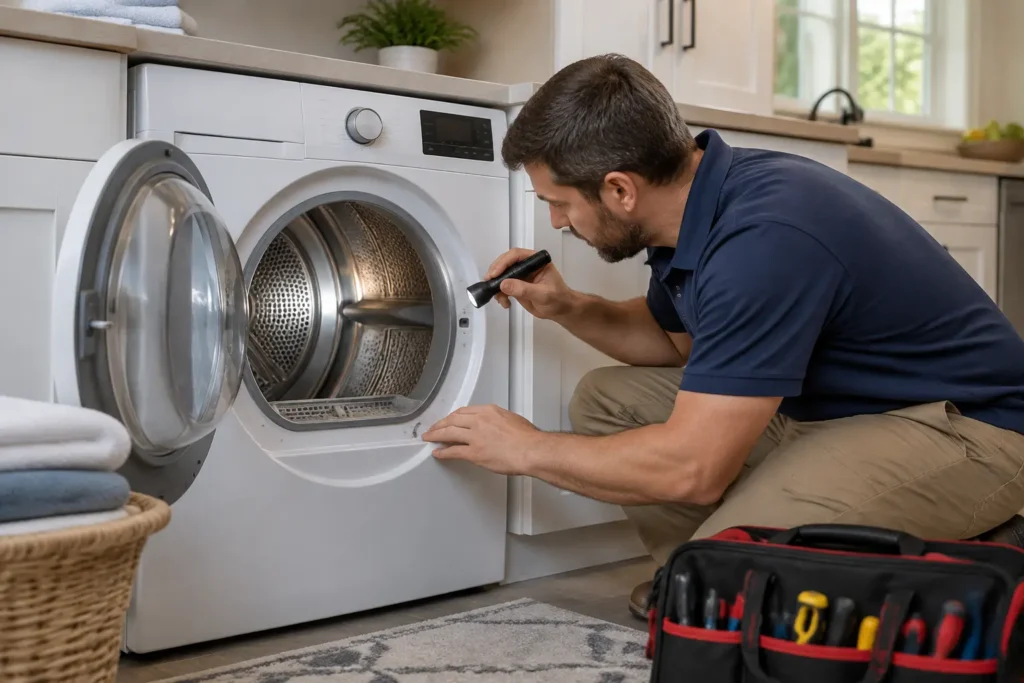
A clothes dryer makes noise for many reasons, and the sound can offer a useful clue—but it cannot confirm which part needs attention. A heavy or uneven load may thump, while a steady squeal or scraping sound can signal a mechanical problem. Start with simple observations, and avoid opening the cabinet or reaching into moving parts.
If the dryer is making a sudden loud noise, vibrating severely, or producing a burning smell, stop the cycle. Safety comes before identifying the exact cause.
First, make the dryer safe
- Stop the cycle and wait for the drum to stop completely. Do not reach inside while it is moving.
- Turn the dryer off. If you need to inspect the drum or lint screen, let the appliance cool first. Unplug it if the plug is readily accessible and the appliance is designed to be unplugged; do not move a heavy dryer or handle wiring to reach a connection.
- Do not remove panels or reach beneath the drum. Internal components and electrical connections should be checked by a qualified appliance professional.
- Stop using it for smoke, sparks, a burning odor, a very hot cabinet, or a breaker that trips repeatedly. If you suspect an electrical problem, leave the dryer off and arrange professional help.
For a gas dryer, if you smell gas, do not operate the appliance or nearby switches. Leave the area and contact your gas utility or emergency services from a safe location, following local emergency guidance.
Match the sound to a possible cause
Thumping or rhythmic knocking
A thump that happens once per drum rotation may come from bulky items tumbling unevenly, such as bedding or a single heavy garment. Pause the dryer, redistribute the load, and check whether clothing has become tangled. Some dryers may also thump briefly after sitting unused, depending on their design. If the sound persists with a small, balanced load, a drum support, roller, belt, or other internal part may need inspection. These are possibilities, not a diagnosis.
Squealing or high-pitched squeaking
A persistent squeal can be associated with worn drum-support parts, an idler pulley, a belt, or a motor-related issue. A small object caught near the drum opening can sometimes squeak as the drum turns, too. With the dryer off and cool, inspect only the visible drum and its opening for loose items. Do not pry at the drum seal or apply oil or spray lubricant; some products can damage appliance materials or create a fire risk.
Scraping, rubbing, or grinding
A metallic scrape may be caused by an object in the drum, such as a zipper or coin, or by something caught near the drum edge. Remove visible items only when the drum is stationary and cool. If scraping continues when the drum is empty, or you hear harsh grinding, stop using the dryer. Continued operation may worsen damage, and internal rubbing or grinding needs a professional inspection.
Rattling or clicking
First check for coins, buttons, or other loose objects in the drum and for items resting on top of the dryer that could vibrate. Make sure the dryer is not touching a wall or a nearby appliance. A brief click at startup or when a cycle changes may be part of normal operation, but repeated rattling from inside the cabinet deserves attention, especially if it grows louder or is joined by a burning smell.
Safe checks you can make
Once the dryer is off and cool, use these basic checks before deciding whether to call for help:
- Remove loose objects from the drum and pockets, and inspect the visible drum opening without pulling at seals or components.
- Redistribute a tangled or bulky load. Check the care labels and avoid overloading; a tightly packed drum can tumble unevenly.
- Confirm the dryer stands level and does not wobble. Adjust only the accessible leveling feet according to the owner’s manual, and do not tilt or move the appliance alone.
- Clean the lint screen as directed in the manual. Keep the area around the dryer clear and follow the manufacturer’s instructions for vent care.
- Check the owner’s manual for sounds described as normal for your model.
If the noise stops after correcting an uneven load or removing a loose item, listen during the next cycle while remaining nearby. Stop the dryer again if the sound returns, changes, or becomes severe. Do not leave a dryer running unattended to see whether a concerning noise goes away.
When to arrange professional service
Call a qualified appliance professional if the dryer continues to squeal, scrape, grind, or thump when empty; the drum appears uneven; the appliance shakes strongly; or the noise returns after basic checks. Also stop using it if drying performance changes along with the sound, or if you notice excessive heat, a burning odor, smoke, or electrical symptoms. A technician can inspect internal supports, the drive system, motor, and other components without guesswork or unsafe disassembly.
If you are in Glendale or a nearby community and the sound persists, you can learn more about dryer repair service or contact the business to discuss arranging a service visit. Sharing when the sound occurs—at startup, throughout the cycle, or only with certain loads—can help narrow down the next steps.