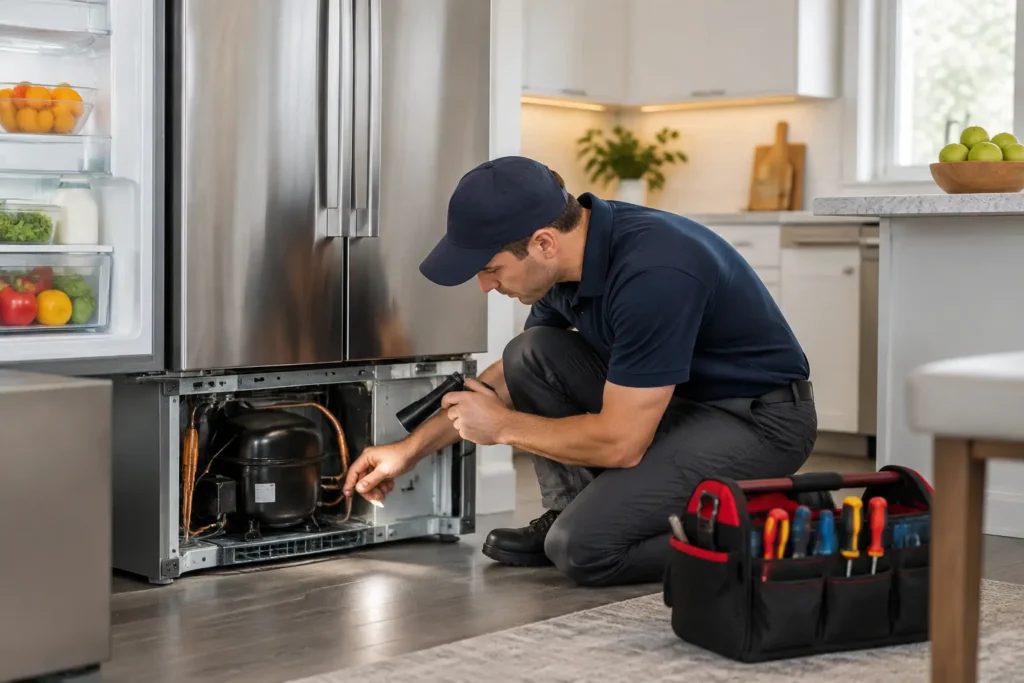
If you are searching for “freon leak repair refrigerator,” you may have noticed weak cooling, a freezer that is thawing, or a refrigerator that runs for long periods. Those symptoms can be worrying, but they do not prove that refrigerant is leaking. People often use “Freon” as a general term for refrigerant, though refrigerators can use different refrigerants. A qualified diagnosis matters because the right repair depends on the appliance and the actual fault.
What a refrigerant leak can look like
Refrigerant circulates through a sealed system of tubing and components. The system is not meant to use up refrigerant during normal operation, so a low charge usually points to a leak or earlier service issue. Possible signs include gradually worsening cooling, a compressor that runs for unusually long periods, or some areas cooling while others do not. These clues are not conclusive: a failed fan, airflow blockage, control problem, damaged door gasket, or compressor issue can create similar symptoms.
A leak may not produce a clear smell or visible puddle. Refrigerant is not water, and the presence or absence of an odor does not reliably confirm a leak. Frost or ice on part of the cooling system may offer a technician a clue, but frost patterns vary by design and should not be treated as a home diagnosis.
Safe checks before arranging service
You can make a few observations without removing panels or touching sealed-system parts. Keep the refrigerator and freezer doors closed as much as practical, and check that food packages are not blocking interior air vents. Make sure the doors close fully and inspect the visible gasket for gaps, tears, or debris. Listen for whether the appliance is running, and note when the cooling problem began and whether it is affecting the refrigerator, freezer, or both.
- Check the temperature settings and confirm the appliance has power using its normal controls.
- Look for an obvious door obstruction or a visibly damaged gasket.
- Write down warning lights, unusual sounds, and any recent movement or damage to the appliance.
- Follow the refrigerator’s manual for any user-accessible cleaning or maintenance; do not remove service panels.
These checks may help identify a simpler issue or give a repair professional useful information, but they cannot establish whether refrigerant has escaped. If food is warming, limit door openings and use a food thermometer if available. Perishable food safety depends on how warm the food became and for how long; when in doubt, consult current food-safety guidance rather than tasting food to judge it.
When to stop and call a professional
Do not cut, bend, puncture, or attempt to seal refrigerant tubing. Do not try to add refrigerant, use a leak-stop product, or test for a leak with a flame. Refrigerant work requires appropriate tools and training, and handling refrigerants is subject to U.S. environmental regulations. Some refrigerators use flammable refrigerants, so the appliance’s label and service information matter.
If you see a damaged line, hear hissing near the appliance, or suspect a refrigerant release, avoid touching the tubing and keep flames and other ignition sources away. Ventilate the area if you can do so safely. If there is an electrical hazard, smoke, or a strong immediate safety concern, keep clear and contact an appropriate qualified professional or emergency service. Do not unplug the refrigerator if reaching the plug would bring you near a suspected release or damaged electrical parts.
A qualified refrigerator technician can inspect the sealed system, use suitable leak-detection methods, and determine whether a leak is present. A proper repair generally means locating the source, addressing the leak, and servicing the system according to the appliance manufacturer’s specifications. Simply adding refrigerant without correcting the cause is not a durable diagnosis or repair.
Questions to ask about the repair
Before authorizing sealed-system work, ask what evidence points to a leak and whether other likely causes have been ruled out. Ask what part or area needs repair, what steps are included, and whether the appliance’s age, condition, and parts availability affect the recommendation. A clear explanation should distinguish a confirmed leak from a suspected one. If the refrigerator is older or has more than one major fault, you can also ask how repair compares with replacement for your situation; there is no single answer that fits every household.
For refrigerator service in Glendale and nearby communities, you can review refrigerator repair service information. If cooling remains unreliable after the safe checks, you are welcome to contact the business to discuss the symptoms and request service. Sharing the model number and a description of what you observed can help guide the next steps; it does not replace an in-person diagnosis.