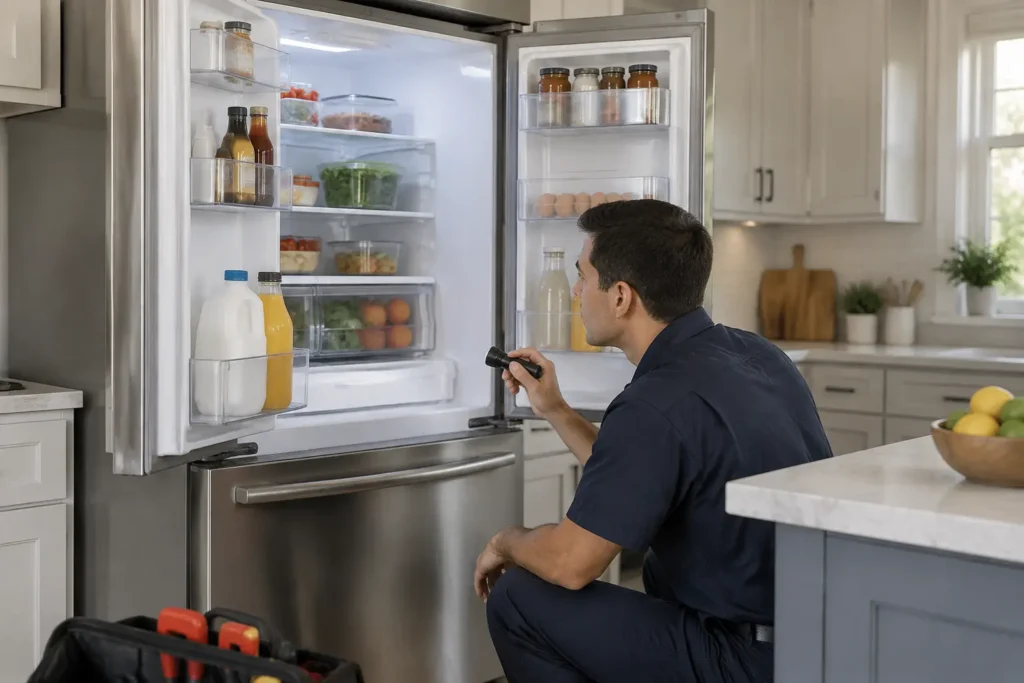
A refrigerator that sounds as though it is running but is not keeping food cold can have a simple airflow or door-closure problem, or a fault that needs professional diagnosis. Start with a few safe observations rather than removing panels or trying electrical repairs. Keeping the doors closed during checks also helps limit further warming.
Check the temperature and protect food first
Use an appliance thermometer to check the refrigerator compartment instead of relying only on how cold the shelves feel. The target is 40°F or below; a freezer is generally set to 0°F. Place the thermometer in the center of the compartment, away from the door, and allow time for a stable reading. Check the owner’s manual for the recommended control settings and how long the appliance may take to respond after an adjustment.
Food safety matters while you troubleshoot. Perishable food that has been above 40°F for more than two hours may no longer be safe to eat. If you do not know how long food has been warm, or its temperature history is uncertain, take a cautious approach and discard items that may be unsafe. Avoid tasting food to decide whether it is safe.
Look for everyday causes of poor cooling
- Confirm the controls. Check that the refrigerator has power and that its temperature control has not been moved to a warmer setting. If the display is blank or the lights are out, check whether the plug is firmly seated only if it is easy to reach and the area is dry. Do not handle a damaged cord or outlet.
- Check the doors. Make sure packages or shelves are not preventing a door from closing. Look for visible gaps, debris, or a folded section along the gasket. Wipe the gasket gently with a damp cloth and close the door. Do not pull hard on a loose seal or use tools to reshape it.
- Keep interior vents clear. Cold air needs room to circulate between compartments. Move food away from visible air openings and avoid packing shelves so tightly that airflow is blocked. Do not put fingers or objects into a vent.
- Consider recent changes. A large grocery load, frequent door opening, a recent power interruption, or a warmer room can make cooling less effective for a while. Keep the doors shut and monitor the temperature rather than repeatedly changing settings.
Notice frost, water, and ventilation clues
A thick layer of frost on an interior wall or around vents can interfere with airflow and may point to a defrost or circulation issue. Take a photo and note where the frost appears, but do not chip it away with a knife, screwdriver, or other sharp object. Avoid using a hair dryer or heat gun; heat can damage plastic parts and create an electrical hazard around water.
If the refrigerator has accessible condenser coils, dust buildup may reduce heat release. Coil locations and cleaning instructions vary by model, and some units do not have user-accessible coils. Consult the owner’s manual first. If it says cleaning is appropriate, disconnect power only when the plug is safely accessible, then use a soft brush or suitable vacuum attachment without bending tubing or damaging wiring. Do not move a heavy refrigerator alone or reach beneath it. If access is awkward, skip this check.
Water on the floor, a burning smell, a damaged cord, repeated breaker trips, or unusual heat around electrical parts calls for stopping. Do not touch wet electrical areas or remove covers. If there is smoke or sparking, keep clear and shut off power at the breaker only if you can do so safely; contact a qualified professional.
When a professional diagnosis is appropriate
If the temperature remains above the safe range after the basic checks, the cause may involve a fan, defrost system, temperature sensor, compressor, or sealed cooling system. These parts are not suitable for trial-and-error repair. Internal electrical components can be hazardous, and refrigerant circuits require specialized handling. Do not remove rear or interior service panels, test live wiring, or attempt to add refrigerant.
Pay attention to what the appliance is doing: whether it runs continuously, cycles on and off, makes a new sound, or has uneven temperatures between compartments. Write down the thermometer reading, when the problem began, and any visible frost or error code. This information can help a technician narrow the diagnosis, but it does not identify a failed part on its own.
Decide on the next step
For food safety, move vulnerable items to another working refrigerator or an insulated cooler with ice if available, and keep track of time and temperature. Do not delay service if food is warming quickly or the appliance shows signs of an electrical problem. If the unit is still under a manufacturer or retailer plan, review its terms before arranging repairs.
When simple checks do not restore cooling, you can learn about refrigerator repair service and request help assessing the next step. A qualified technician can inspect the system and explain the findings before repair work proceeds. There is no need to guess at a costly component or open the appliance yourself.