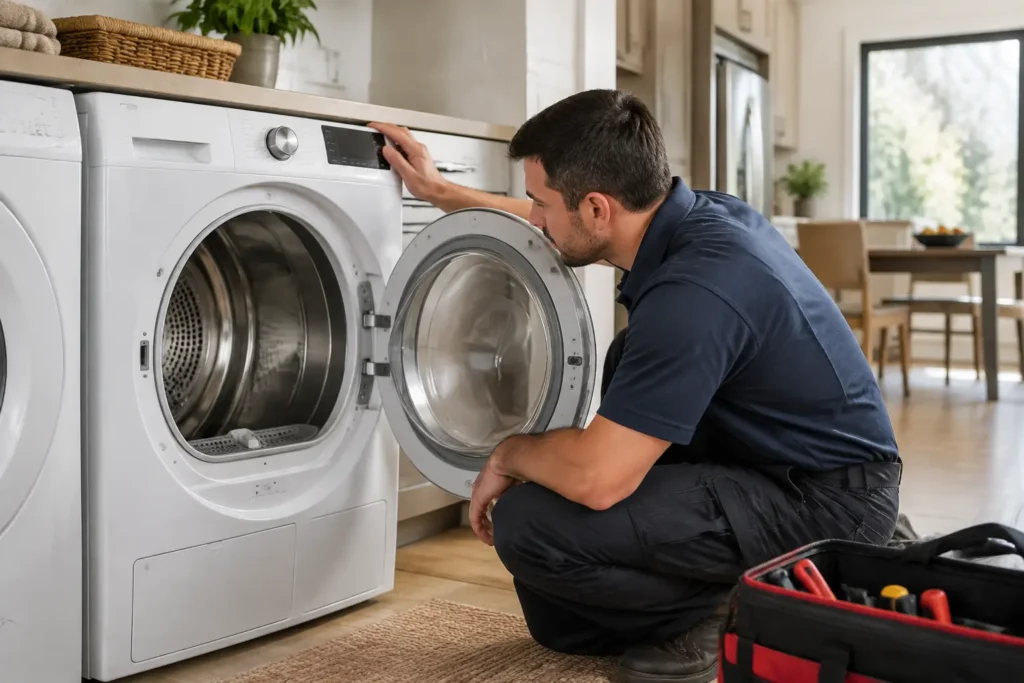
A dryer making noise can be unsettling, especially when the sound appears suddenly or gets louder from one load to the next. Some causes are external or related to the load; others involve parts that need professional inspection. Pay attention to the sound’s timing, rhythm, and location rather than guessing at a repair.
Before checking anything, stop the cycle if the dryer smells hot or smoky, produces sparks, shakes forcefully, or makes a harsh grinding sound. Let the drum cool. For basic checks inside the drum, switch the dryer off and unplug it first. Do not remove panels or reach into openings beyond normal user-accessible areas.
What the sound may tell you
Thumping or rhythmic knocking
A thump that repeats as the drum turns can come from a bulky or uneven load, such as a large blanket or a few heavy items. Pause the dryer, let the drum stop, and redistribute the items according to the garment-care instructions and the appliance manual. If the thumping happens with different, balanced loads, persists when the drum is empty, or is accompanied by strong vibration, stop using the dryer and arrange an inspection. A damaged or displaced component may need attention.
Rattling or clinking
First check for loose objects such as coins, buttons, or a zipper pull inside the drum. With the dryer off and cool, remove items and inspect the drum visually. Also check that anything resting on top of the appliance is not vibrating against it. If the noise continues after obvious objects are removed, avoid trying to locate it by reaching behind or beneath a running dryer. A loose internal part can be difficult to identify safely from outside.
Squealing, squeaking, or chirping
A high-pitched sound that repeats during a cycle can be associated with wear or friction in moving parts, though the sound alone cannot identify the failed part. Note whether it starts immediately, develops after the dryer warms up, or changes as the drum turns. If it returns on successive cycles, grows louder, or comes with a burning smell, discontinue use and request qualified service rather than applying lubricant or taking the cabinet apart.
Scraping or grinding
A rough scrape or grind can indicate that something is rubbing where it should not, or that a rotating component is worn or damaged. Turn the dryer off. Do not keep running it to see if the sound clears: continued operation may worsen damage. If you can see an object resting loose inside the drum, remove it only after the dryer is off, cool, and unplugged. Leave any object lodged near an opening or beneath the drum for a professional.
Buzzing or humming
A brief hum may occur as a motor or control responds, but a loud, prolonged, or new buzz deserves attention—especially if the drum does not turn, the dryer stops, or the sound is paired with an electrical smell. Switch the appliance off and unplug it if you can do so without touching a hot, damaged, or wet plug or outlet. Do not open electrical compartments or attempt wiring checks.
Safe checks before arranging service
- Check the load: Remove loose objects and redistribute bulky items. Follow the dryer’s manual for load-size guidance.
- Inspect the drum: With the dryer off, cool, and unplugged, look for visible debris or damage. Do not pry at panels or seals.
- Check stability from outside: If the appliance visibly rocks, stop using it. Do not move a heavy dryer alone or reach behind it to adjust feet or connections.
- Clean the lint filter: Follow the manual’s routine cleaning directions. A clogged filter or vent can restrict airflow and increase overheating risk, though it may not explain every noise.
- Record the pattern: Note whether the sound occurs at startup, throughout the cycle, with particular loads, or during a specific setting. This can help guide diagnosis.
Never operate a dryer with its cabinet open, and do not bypass a door switch or other safety device. If you suspect an electrical fault, leave the appliance off and contact a qualified repair professional. If you smell gas near a gas dryer, do not operate switches or create a flame; leave the area and contact the gas utility or emergency services from a safe location.
When professional diagnosis makes sense
Arrange service when a new noise persists after simple load and visible-object checks, when the drum will not turn normally, or when there is scraping, grinding, repeated squealing, or unusual vibration. Stop using the dryer promptly for smoke, a burning odor, sparks, a hot or damaged cord, or a gas odor. Do not remove the back or front panel to inspect belts, rollers, bearings, wiring, or the motor; these areas can present electrical, mechanical, and sharp-edge hazards.
For homeowners in Glendale and nearby communities, sharing the sound pattern and when it occurs can help make a service conversation more useful. If you would like a professional to assess the appliance, you can learn more about dryer repair service and request an appointment when it suits you. A sound is a clue, not a diagnosis, so an inspection may be needed to identify the cause and determine the appropriate next step.