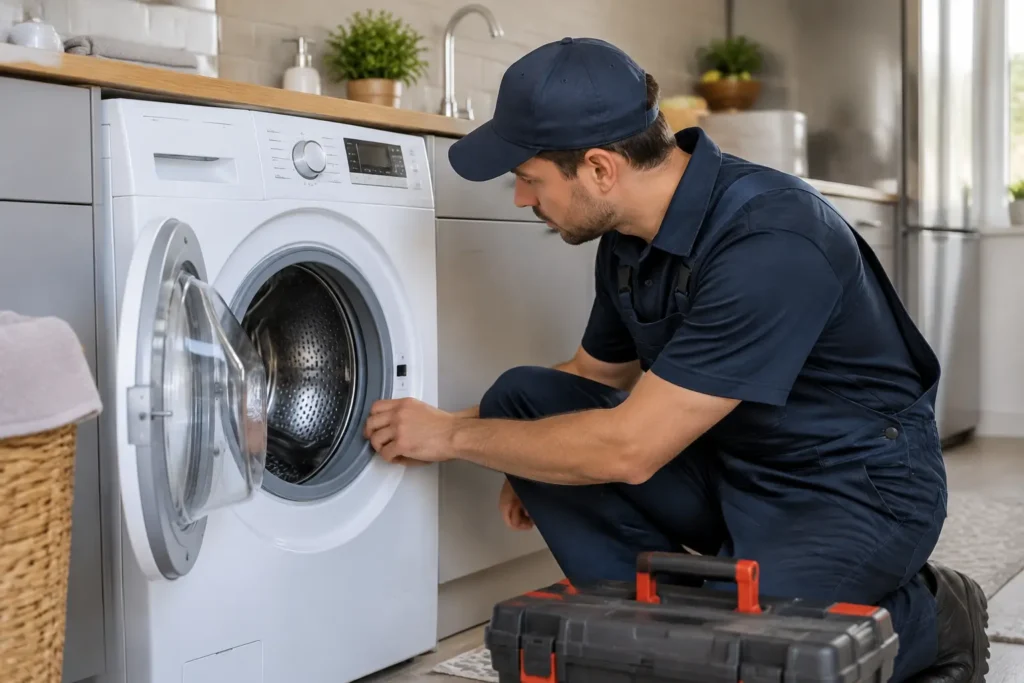
A washing machine that stops mid-cycle or leaves clothes soaking wet can disrupt a household routine. Some causes are simple, such as an unbalanced load or a closed water valve; others involve components that need professional diagnosis. If you are looking for washing machine repair in La Crescenta-Montrose, a few safe observations can help clarify what is happening before you arrange service.
Start with safety. If you see water near the outlet, plug, or electrical cord, do not touch the washer or standing water. Keep people away and, if it is safe to reach without crossing wet flooring, switch off power at the breaker. If you notice a burning smell, smoke, sparks, or a damaged cord, stop using the machine and contact a qualified appliance professional. Do not remove panels or reach into a running washer.
First checks for a washer that will not start
Confirm that the door or lid is fully closed and that the cycle has actually been started. Some machines pause if the door is not latched, the control lock is on, or a delayed-start option is selected. Check the display for an error code and note it before turning the machine off; the code may help identify the conditions the washer detected.
Check that the washer is plugged in securely only if the plug and surrounding area are dry and undamaged. You can also check whether the household breaker has tripped. If it trips again after being reset, leave it off and call a qualified professional. Repeatedly resetting a breaker or using an extension cord is not a safe workaround.
If the washer will not fill or seems to fill slowly
Make sure the hot and cold water supply valves are open. Look at the visible inlet hoses for kinks, crushing, or obvious damage, but do not disconnect them while the machine is connected to power or pressurized with water. If a hose is bulging, leaking, or badly worn, stop using the washer and arrange a safe replacement.
Check whether the selected cycle and temperature settings match what you intended. Some cycles use less water or may pause while sensing the load. If water pressure at other fixtures has also changed, the issue may be with the home’s water supply rather than the washer. If the valves are open and the washer still does not fill, an internal valve, sensor, or control issue may need diagnosis.
If it will not drain or leaves clothes wet
Look for a kinked or crushed drain hose and confirm that the hose has not shifted out of its usual position. Avoid pulling the washer forward if it is heavy or if doing so could strain hoses or the power cord. A load that is too large or bunched to one side can also prevent a washer from spinning properly. Pause the cycle, wait until the drum has stopped, and redistribute the clothes if the door or lid unlocks normally.
Some models have a user-accessible drain filter; others do not. Consult the owner’s manual before opening any access area. If the manual describes filter cleaning, follow its steps closely and prepare for water to spill. Do not force a stuck filter or remove a panel to reach a pump. If water is leaking, the washer will not drain, or the filter cannot be accessed as described, stop and seek service.
Leaks, odors, and unusual operation
If you find a leak, stop the cycle if you can do so safely, then close the water valves if they are readily accessible and the floor is dry. Do not touch a wet plug or move the washer through standing water. Note where the water appears: near a hose connection, beneath the machine, or around the door. The location and timing can help a professional narrow down possible causes, but avoid running repeated cycles to reproduce a leak.
A musty smell may come from residue, moisture, or detergent buildup. Use the washer-cleaning cycle and cleaning method recommended in the manual, and leave the door or lid ajar afterward if the manufacturer allows it. Use detergent labeled for your washer type and avoid exceeding the recommended amount. Too much detergent can create excess suds and interfere with rinsing.
When to arrange professional repair
Stop troubleshooting if the washer makes grinding or electrical buzzing sounds, repeatedly stops with an error, leaks from underneath, trips a breaker, or shows signs of a damaged cord. These symptoms can involve electrical, drive, pump, or control components. Diagnosing them may require tools and access to internal parts; do not bypass a lid or door interlock, even temporarily.
Before requesting help, write down the make and model, the displayed code, which cycle was running, and what you observed. Mention whether the washer fills, drains, and spins, and whether the problem happens with every load. Clear notes can make the initial assessment more useful without requiring you to open the machine.
For more information about available washer repair service, you can review the service details and decide whether to request an appointment. If these safe checks do not resolve the issue, consider arranging a professional diagnosis rather than continuing to run a malfunctioning washer.