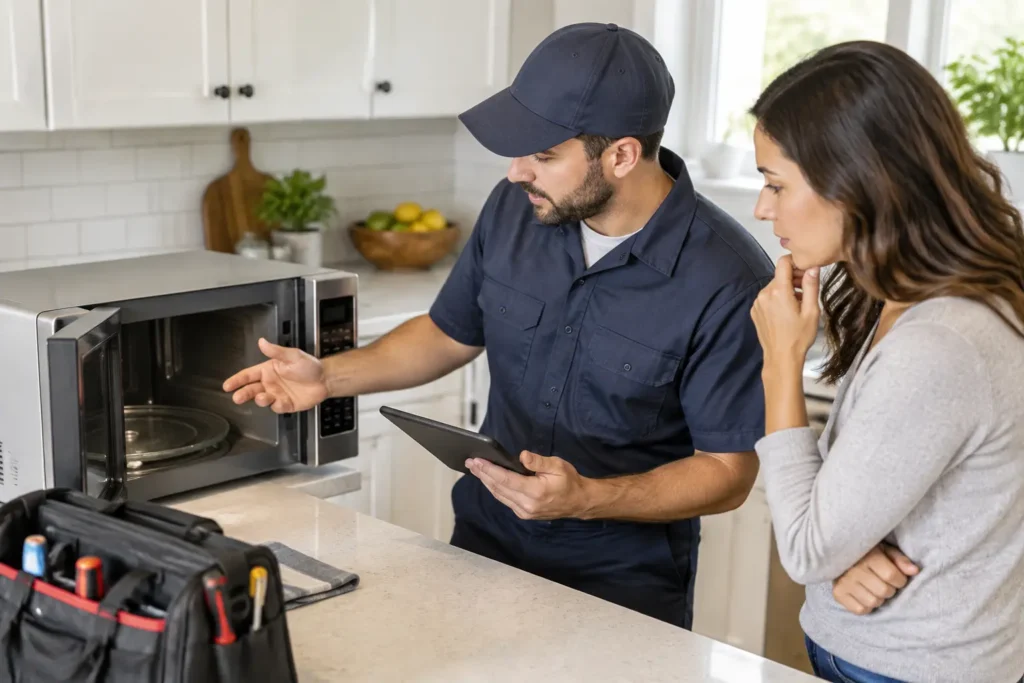
A microwave that stops heating, makes unusual sounds, or will not start can disrupt everyday routines. The cost to repair it depends on what has failed and how the appliance is installed; the symptom alone usually is not enough to predict the work. Understanding what an estimate includes can help you compare repair with replacement without relying on a guess.
Why microwave repair cost varies
The diagnosis matters. Similar symptoms can have different causes. A microwave that runs without heating, for example, may need a professional diagnosis before anyone can identify the faulty part. A control problem, damaged door component, or failure in the heating system can involve different labor and parts. These are possibilities, not a way to diagnose the appliance from the symptom alone.
Model and installation affect the work. Countertop units are generally easier to access than built-in or over-the-range models, which may require careful removal and reinstallation. Model-specific parts may also differ in availability and cost. A technician should confirm the model information before finalizing a repair recommendation.
Labor and visit terms matter. Ask whether the estimate includes diagnosis, labor, parts, installation, and any applicable taxes or fees. Find out whether a diagnostic charge is separate or credited toward approved work. Policies vary, so ask what applies to your particular service request rather than assuming a fee will be waived or applied.
What to ask when reviewing an estimate
- What fault was identified? Ask for a plain-language explanation of the diagnosis and how it relates to the symptom.
- Which parts and tasks are included? Clarify whether the quoted work includes removing and reinstalling a built-in unit, if relevant.
- Could the estimate change? Ask what would prompt a revised quote and whether the technician will check with you before doing additional work.
- What happens if the part is unavailable? Ask about expected timing and whether there are suitable options for your model.
- What service terms apply? Request clear information about any parts or labor coverage offered for the proposed repair. Do not assume a particular warranty or duration.
Written estimates make it easier to compare options. If you are gathering more than one, compare the same scope of work, not just the total. A lower initial figure may not include the same diagnosis, parts, or installation tasks as another estimate.
Repair or replacement?
Compare the complete repair estimate with the cost of a suitable replacement, including delivery, installation, and removal where needed. Consider the microwave’s age, condition, capacity, features, and how well it meets your needs. A repair can be reasonable when the appliance is otherwise in good condition and the work is clearly defined. Replacement may be worth considering when the repair is extensive, parts are difficult to obtain, or another failure seems likely. There is no single age or dollar threshold that fits every household.
For a built-in model, include any installation work in the comparison. A replacement may involve fitting or cabinet considerations, so check compatibility before buying. If the microwave is part of a larger appliance setup, confirm that a proposed replacement will suit the available space and electrical requirements.
Safe checks before requesting service
Use only basic checks that do not involve opening the appliance. Confirm that the plug is firmly connected if it is safely accessible, and check whether the household breaker has tripped. Do not repeatedly reset a breaker that trips again. If the microwave is built in or the outlet is difficult to reach, do not move the unit or strain to access it.
- Check that the door closes normally and that there is no visible damage to the door or its sealing surfaces.
- Remove any metal cookware or utensils and check for food residue or damage inside the cooking cavity, but only when the appliance is switched off and cool.
- Note what happens, such as whether the display lights, the turntable moves, or the unit stops mid-cycle. This information can help describe the issue.
If the microwave sparks, smells burnt, smokes, makes a loud unusual sound, or has a damaged door, stop using it. Disconnect power only if you can do so safely; otherwise, leave it alone and contact a qualified professional. Never remove the outer cover or attempt to handle internal electrical parts. Microwave components can retain dangerous voltage even after the appliance is unplugged. Do not bypass door interlocks or operate a unit with a door that does not close properly.
Getting a useful local estimate
When contacting a repair service in Glendale or nearby communities, provide the brand, model number, installation type, and a clear description of the symptom. Mention any visible damage or electrical issue. This information may help the service provider explain what to expect, but a firm repair recommendation may require an in-person diagnosis.
If you would like a professional assessment, you can learn more about microwave repair service and request information about arranging service. Ask for the relevant fees and estimate terms before approving work. A clear explanation of the diagnosis and scope can help you decide whether repair fits your needs.