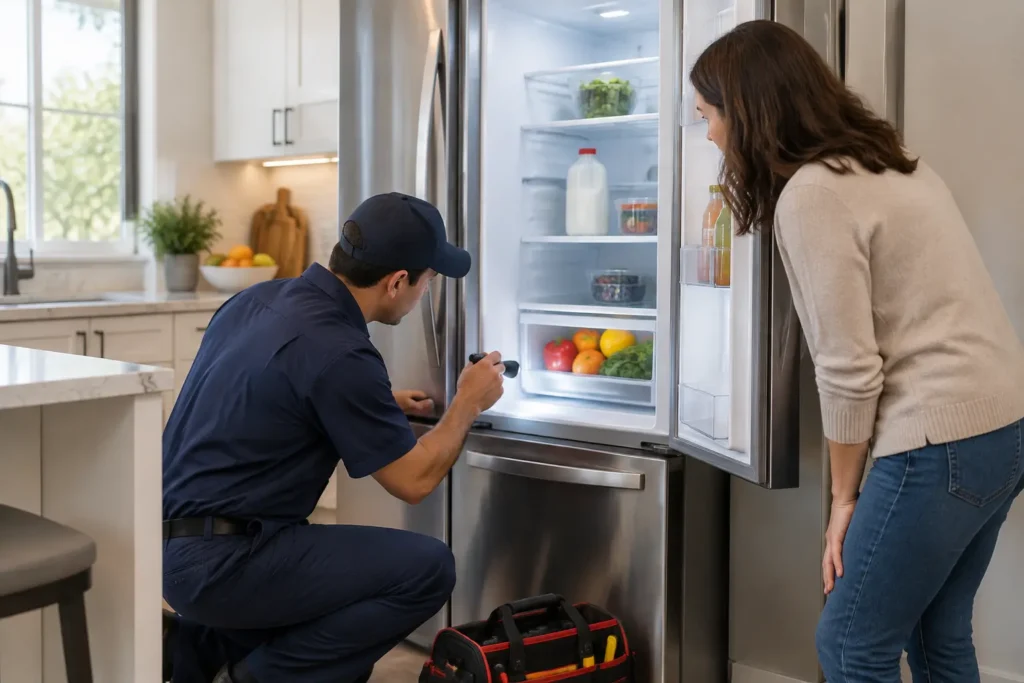
A refrigerator that seems less cold than usual can put food at risk, but the cause is not always obvious. Before assuming a major failure, check a few everyday conditions that can affect cooling. These steps are intended for external, user-accessible areas only; do not remove appliance panels or work on electrical or sealed refrigeration components.
If you are looking for refrigerator repair in La Crescenta-Montrose, the checks below can help you describe the symptoms clearly and decide whether professional diagnosis is appropriate.
Start with the temperature and the pattern
Place a refrigerator thermometer in a glass of water on a middle shelf and leave it there for several hours before judging the reading. The U.S. Food and Drug Administration recommends keeping a refrigerator at 40°F or below. A control dial or display may show a setting rather than the actual cabinet temperature, so a separate thermometer is more useful.
Note whether the problem affects the refrigerator, freezer, or both. Also record when you first noticed it, whether temperatures vary during the day, and whether you hear unusual clicking, buzzing, or repeated starting sounds. These observations can help a repair professional narrow down the issue, though they do not identify a failed part by themselves.
Check settings, airflow, and loading
- Verify the controls. Make sure the temperature setting has not been changed accidentally. If you adjust it, use the manufacturer’s recommended setting and allow time for the temperature to stabilize.
- Keep vents clear. Find the interior air openings and avoid blocking them with containers or bags. Cold air needs room to circulate, especially when the appliance is full.
- Consider recent loading. A large amount of warm groceries, frequent door opening, or an unusually packed compartment can temporarily affect temperature. Give the unit time to recover and check again with the thermometer.
- Look for frost or condensation. Heavy frost on accessible interior surfaces, persistent moisture, or a freezer that cools while the refrigerator stays warm can indicate an airflow or defrost problem. Do not chip away frost with a knife or other sharp object.
Inspect the doors without taking anything apart
Check that food packages and shelves do not prevent the doors from closing fully. Look over the visible door gasket for tears, looseness, or areas that are visibly dirty. Wipe a dirty gasket with a soft cloth and mild soapy water, then dry it. Avoid solvents or abrasive tools unless the manufacturer specifically recommends them.
After closing the door, check that it sits evenly against the cabinet. A damaged gasket, misaligned door, or hinge issue may let cold air escape. Avoid trying to adjust hinges or force a door into alignment if the instructions for your model do not describe a simple user adjustment.
Look around the appliance safely
Check whether the refrigerator has adequate clearance around it, following the spacing guidance in its manual. Dust on an accessible grille may be removable if the manufacturer describes how to clean it. First switch the appliance off or unplug it only if the plug is easy to reach and the area is dry; follow the manual, and do not pull on the cord. Some models have no user-accessible coils, so do not remove a cover to reach them.
Do not move a heavy refrigerator alone. If it would need to be pulled out, if a water line could be strained, or if access requires removing a panel, leave that work to a qualified professional. Stop using the appliance and seek help if you notice a damaged cord, a burning smell, sparking, or repeated breaker trips. Do not repeatedly reset a breaker that trips again.
When water or ice is part of the problem
If water is pooling near the refrigerator, check whether the source is an obvious spill or a visibly loose container before investigating further. For a suspected leak from the appliance, turn off the water supply only if you can safely identify and reach its shutoff. Keep water away from outlets and cords. Do not disconnect a water line or remove a panel unless your manual gives a safe user procedure.
A weak ice maker or water dispenser can have a different cause from poor food-compartment cooling. Note whether the issue started after a filter change, a move, or a water interruption. Use only the filter type specified for your model, and follow its replacement directions.
Protect food and know when to call
If the refrigerator is above 40°F, limit how long perishable food remains at that temperature. Food safety guidance generally advises discarding perishable items held above 40°F for more than two hours; when in doubt, do not taste food to decide whether it is safe. Move items to a properly cold refrigerator or cooler if available.
Arrange professional diagnosis if the temperature stays too high after basic checks, the appliance repeatedly starts and stops, frost keeps returning, or both compartments are losing cooling. Stop troubleshooting if you suspect an electrical problem, see an exposed wire, or hear persistent abnormal mechanical sounds. Sealed refrigerant systems and internal electrical parts require trained service; do not puncture tubing or attempt a refrigerant repair.
For help assessing a cooling problem, you can review our refrigerator repair service information and contact the business to discuss scheduling. Sharing the model number, measured temperature, and symptoms can make that conversation more useful. No single symptom guarantees a particular repair, so a diagnosis should come before approving work.