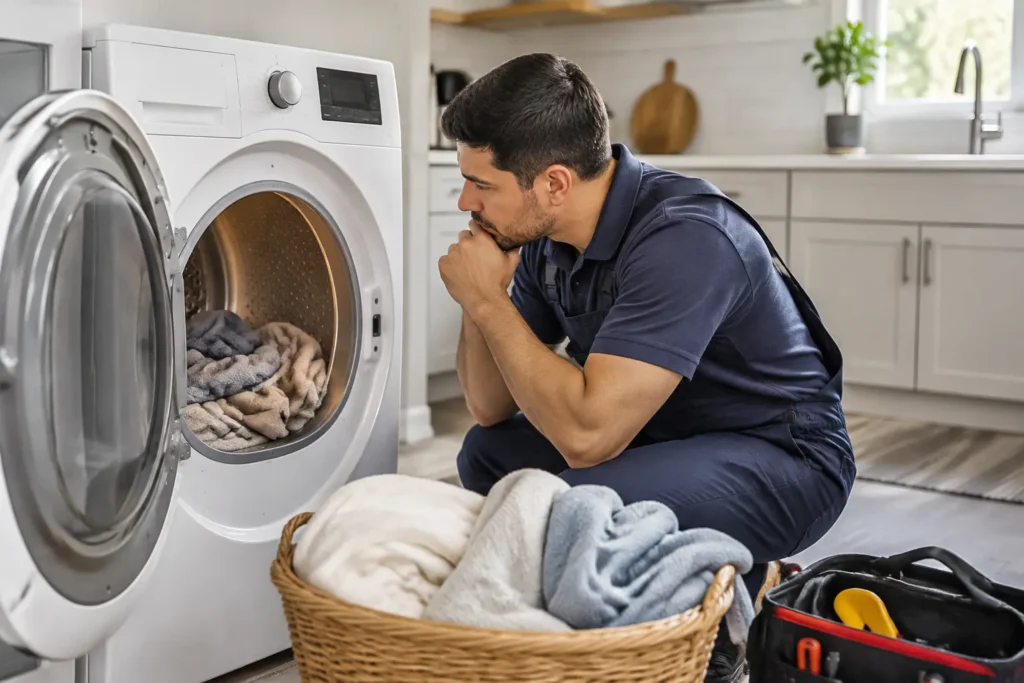
A dryer can make brief sounds as clothes tumble, but a new or worsening noise deserves attention. The sound alone rarely identifies a failed part with certainty. What matters is when it happens, whether it changes with the load, and whether you notice other warning signs such as poor tumbling, excess heat, or a burning odor.
Use these clues to decide what you can safely check and when to stop the dryer. Do not remove panels or reach into a machine that is running. If the noise persists after simple checks, a qualified appliance professional can inspect the cause.
Start with the pattern, not a guess
Listen from a safe distance while the dryer is operating normally. Note whether the sound begins at startup, repeats with each drum turn, appears only with certain items, or continues when the drum is empty. You do not need to run the dryer longer than usual to investigate. If the sound is harsh, suddenly louder, or accompanied by a hazard sign, stop the cycle.
Different dryer designs and conditions can produce similar sounds, so the clues below are possibilities, not a diagnosis.
What common dryer noises may suggest
Rattling or tapping
A loose zipper, button, coin, or other object in a garment can tap against the drum. First stop the dryer and let it cool. Remove the load and check pockets, then look over the drum surface and the area around the lint filter for visible objects. Check only places you can reach without tools or disassembly. If the tapping continues with an empty drum, the sound may come from the machine rather than the clothing.
Squeaking or chirping
A short squeak that appears intermittently may be related to a moving component or to friction within the dryer. A squeal that repeats on every rotation, grows louder, or continues with different loads is a reason to stop using the machine and arrange an inspection. Avoid applying oil or lubricant unless the appliance manufacturer specifically directs it; the wrong product or location can create damage or a safety concern.
Thumping or rhythmic knocking
Bulky items, tangled bedding, or an uneven load can make the drum turn less smoothly and produce a repeating thump. Stop the cycle, redistribute the items, and avoid overloading. If the sound remains with a balanced load or an empty drum, the cause may involve a worn or misaligned component. A thump that is suddenly severe should not be ignored.
Scraping, grinding, or a loud rumble
These sounds can indicate that something is rubbing or that a rotating part needs attention. Turn the dryer off rather than trying repeated cycles to see whether it clears. Do not reach behind or beneath the drum, remove a cabinet panel, or attempt to test internal parts. Continued operation can worsen damage, and internal inspection may expose electrical or mechanical hazards.
Clicking or a brief startup sound
A single click when a cycle starts or a control changes may be part of normal operation, depending on the model. Repeated clicking, clicking paired with failure to start or tumble, or a sound that is new and persistent deserves attention. Check the owner’s manual for model-specific descriptions, but do not bypass a door switch or any other safety device.
Safe checks you can make
- Stop and cool the dryer: Wait until the drum and clothing are cool before checking the load or lint-filter area.
- Remove obvious items: Check pockets and the accessible drum surface for loose objects. Do not use tools to fish inside the appliance.
- Try a smaller, balanced load: If the sound occurred only with bulky or tangled items, rearrange them and follow the manufacturer’s loading guidance.
- Check the lint filter: Remove and clean it as directed in the manual. Do not operate the dryer with the filter missing.
- Record the clues: Note the sound, when it occurs, and whether the dryer still tumbles and heats. This can help explain the problem when requesting service.
When to stop and seek help
Stop using the dryer if you smell burning, see smoke or sparks, feel an electric shock, notice a damaged power cord, or hear a sudden grinding or severe scraping noise. Do not touch a damaged cord or open the appliance. If it is safe and straightforward, switch the dryer off and disconnect power; if you cannot do so safely, keep away and contact a qualified professional. For a suspected electrical hazard, get professional help rather than attempting repairs.
If a gas dryer smells of gas, do not operate it, use switches, or try to locate the leak. Leave the area and contact your gas utility or emergency services from a safe location. Have a qualified professional assess the appliance before using it again.
Persistent dryer noises can have several causes, and internal parts are not suitable for casual inspection. If safe checks do not resolve the sound, you can learn about dryer repair service and request an assessment. Service is available in Glendale and nearby communities; you can contact the business to discuss the symptoms and whether to book a visit.