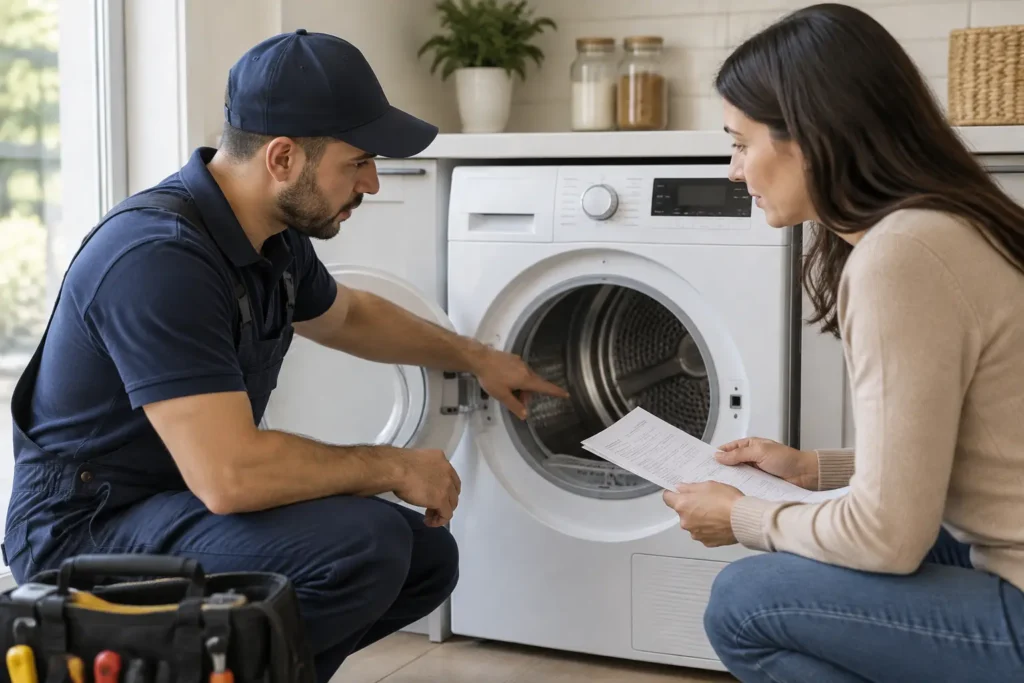
A dryer warranty can be useful when an appliance develops a problem, but the word “warranty” does not guarantee that every repair will be covered. The details depend on the document, the dryer’s age, the reported issue, and sometimes how the appliance was installed or maintained. Before arranging work, gather your records and check the terms so you can make an informed decision.
Start by identifying the kind of coverage
Several types of protection may be described as a dryer warranty, and they do not necessarily work the same way:
- Manufacturer’s limited warranty: This is supplied with a new appliance. It may cover specified defects for a defined period, with different terms for different components. Read the actual warranty rather than assuming all parts and labor are treated alike.
- Extended service plan: This may be purchased separately or offered through a retailer or plan provider. Check its service process, exclusions, fees, and whether the provider requires approval before work begins.
- Home warranty plan: This is a separate contract, not the same thing as a manufacturer’s warranty. It may set its own limits, service procedures, and exclusions. Review the contract and contact the plan provider about its process.
Coverage terms vary, so avoid relying on a general description, a sales conversation, or another owner’s experience as a substitute for your documents. If terms are unclear, ask the manufacturer or plan provider to explain them in writing.
Find the documents and appliance details
Look for the purchase receipt, warranty booklet, service-plan contract, and any registration confirmation. Find the dryer’s model and serial number on the appliance label; its location varies by model, so consult the owner’s manual if needed. Keep a copy of the documents and note the date you first noticed the problem.
When contacting a provider, describe what the dryer does without guessing at the cause. For example, note whether it fails to start, stops mid-cycle, tumbles without heating, or displays a code. Record when the symptom occurs and whether it happens on more than one setting. A clear description can help the provider decide what information it needs next.
Read the limits before authorizing work
Check the coverage period and what the contract says about parts, labor, diagnosis, transportation, and service-call charges. These items may be handled differently or may not be included. Look for exclusions and requirements concerning installation, maintenance, approved service providers, and advance authorization. Do not assume that a part listed in an advertisement is covered under your particular plan.
If you have a possible warranty claim, contact the responsible provider before scheduling a repair. Ask whether it must approve service first, which service companies it accepts, what costs might remain your responsibility, and what records to keep. Save the case number, written instructions, and any messages. Starting work without required approval could complicate a claim, depending on the contract.
Also ask what happens if the reported issue is not covered. The answer may depend on the provider’s rules. Get the scope and any charges explained before agreeing to diagnostic or repair work. If you are comparing options, request a written description of the proposed work and costs, then compare it with the coverage terms.
Take safe, limited steps while you check
You can usually make observations without opening the dryer cabinet. Check that the door closes, note any display message, and confirm that the selected cycle and controls are set as intended. If the manual describes a user-accessible lint screen or routine care, follow its directions. Do not remove panels or attempt internal electrical or gas repairs to investigate a warranty concern.
Stop using the dryer if you notice a burning smell, smoke, unusual heat around the appliance, damaged wiring, or repeated breaker trips. If there is smoke or fire, move away and contact emergency services. For an electrical hazard, do not touch exposed wires or the appliance; seek a qualified professional. If you smell gas, leave the area without operating switches or using a phone nearby, then contact the gas utility or emergency services from a safe location. A warranty question should never delay a response to an immediate hazard.
When warranty coverage is unclear or has ended
If the provider says the issue is excluded, ask which contract term applies and request the decision in writing. You can then decide whether to seek another assessment, subject to any plan rules. If coverage has expired, a qualified repair professional can assess the dryer and explain the available repair options. Avoid treating an online symptom description as a confirmed diagnosis; several different faults can produce similar behavior.
For help assessing a dryer problem in Glendale or nearby communities, you can review dryer repair service information and contact a repair provider when you are ready. Share the model details, symptoms, and any warranty instructions you have received. There is no need to book until you have reviewed your options and are comfortable with the next step.